
Kumi's Review
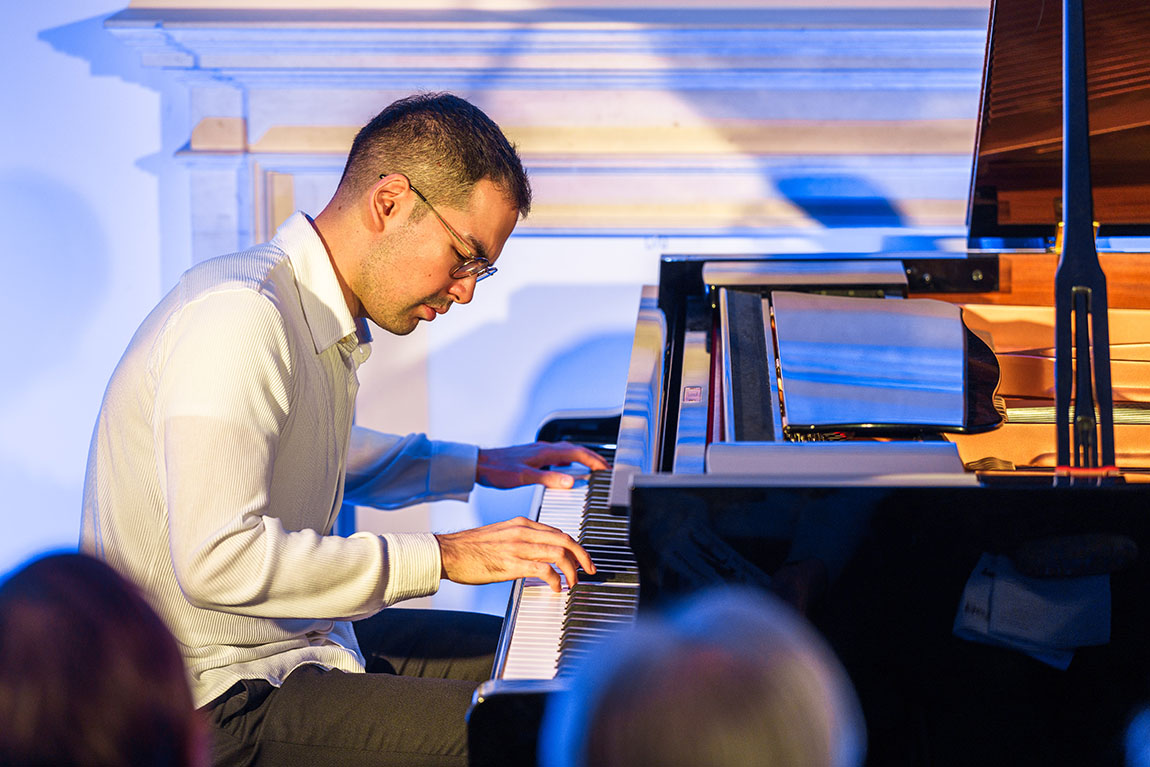
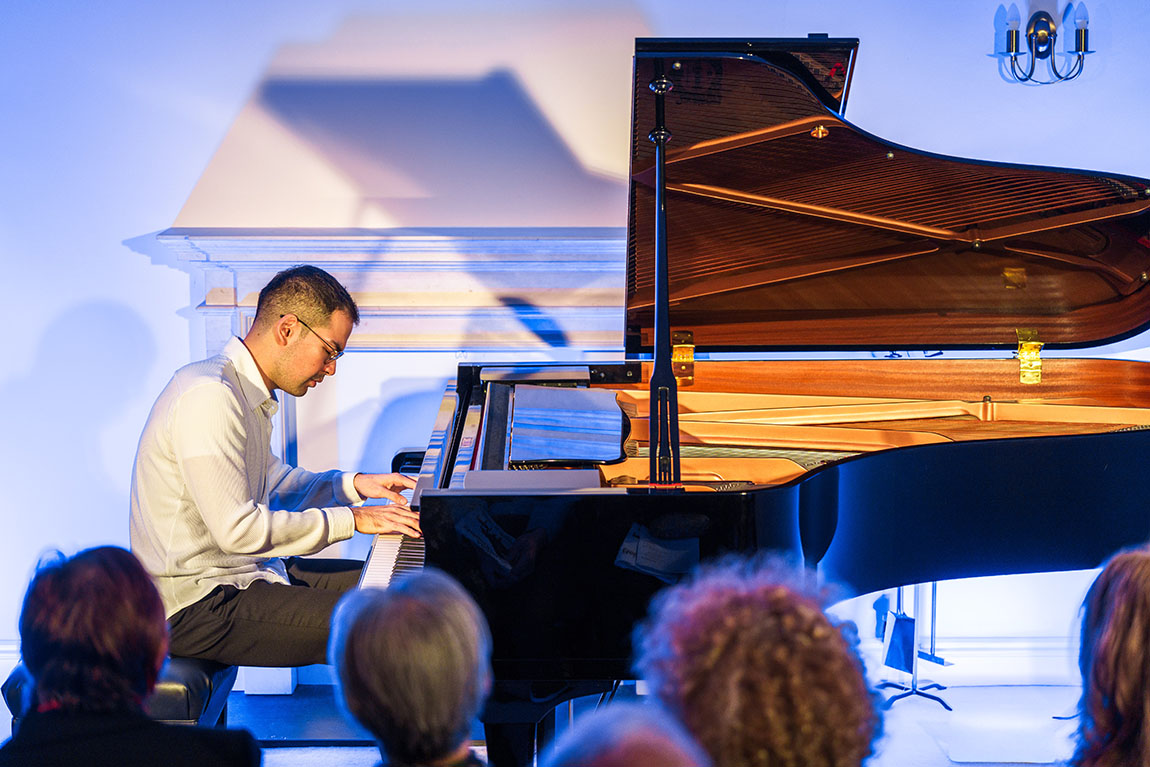
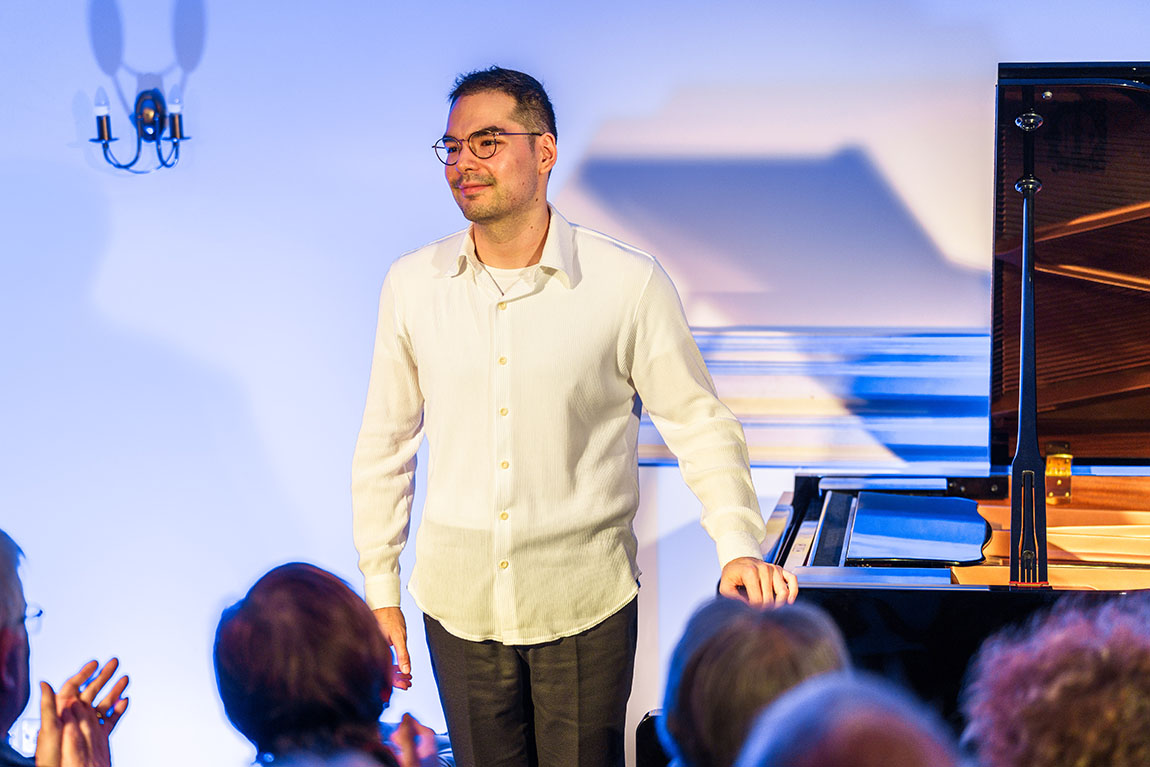
This was a totally rapturous occasion. Alim Beisembayev, a soft-spoken pianist who exhibits a kind and unassuming demeanour, is gifted with a natural authority backed by his impeccable technical skills. Take the example of Chopin’s No. 2 Sonata, which he played in the second half: from the ominous entry of the 1st movement until the very last note of the whirlwind finale, there wasn’t a single second in which we lost our focus. The famous 3rd movement, Funeral March, was particularly spectacular. It was as if we were gripped by a strong force; the gorgeous dark chords, convincing tempo, and an interpretation which enabled us to imagine trudging in a slow proceeding, thunderous fortissimo which were never invasive or pounding. Then came the heavenly middle part – my imagination sored literally with angels floating, while Alim played the strikingly simple melody and harmony with uttermost clarity and breath-takingly gorgeous sonority, in a simple, undecorative manner. Never over-indulging and over-cooking. Just when I thought I’d heard enough of this Sonata (after watching countless live streaming of the Chopin Competition!), Alim changed the whole game. It was a totally satisfying experience.
Schumann’s Symphonic Etudes, my all-time favourite, were played with conviction and precision. By being precise, I don’t mean it was unexciting carbon copy of the score. Instead, he knew and interpreted exactly what he wanted to voice in a thoughtfully meticulous way, and what he wanted us to hear. Each repeat was played with subtly pronounced differences, which often gave us pleasurable and refreshing discoveries.
These Schumann’s and Chopin’s masterworks were paired with Debussy’s Image Book 1 and Book 2 respectively, making wonderful contrasts in every aspect. With the Images, we were immediately placed in the Debussy universe of sound ripples and colourful flow of time. The beauty of Alim’s barely audible pianissimo was indescribable, leaving clear footprints.
Alim gave us a present of two encores, Chopin Impromptu in A flat major and Scarlatti Sonata K. 455. By this time, we were all Alim fans
Programme Notes
Debussy: Images, Book I
Debussy’s first set of Images invites the listener into a sound world where atmosphere and suggestion replace direct statement. Written between 1901 and 1905, these three pieces show the composer refining the delicate balance between colour and structure that became central to his mature style.
The opening piece shimmers with layers of texture that blur the distinction between melody and accompaniment. The pianist becomes painter as much as performer, shaping sound with the finest control of tone and pedal. The middle movement glides with quiet elegance, its rhythmic poise evoking a dance seen through soft light. In the final piece, broad sonorities unfold like a vast seascape in motion. The listener senses both depth and distance, carried along by music that seems to breathe rather than march forward.
Throughout the set, Debussy’s craft is disguised by his restraint. The surface appears spontaneous and fluid, yet every phrase is balanced with precision. What emerges is a study in light and shadow, a play of reflection that turns the piano into an instrument of infinite hues.
Schumann: Symphonic Etudes
Schumann’s Symphonic Etudes stand among the great monuments of Romantic piano music. What began as a group of variations on a theme by Baron von Fricken grew, over many years, into a vast cycle that unites technical mastery with the deepest poetic imagination. Schumann revised and reworked the set several times, and its publication history reveals his lifelong tendency toward restlessness and revision. The title itself captures the work’s scope: these are etudes in name, but symphonic in scale and spirit.
The noble theme that opens the work establishes both dignity and clarity, qualities that underlie every transformation to come. Each etude explores a different rhythmic, harmonic, or expressive idea, testing the pianist’s imagination as much as technique. Some bristle with rhythmic energy, others unfold in inward reflection. Through these contrasts, Schumann’s dual creative personalities — the impetuous Florestan and the dreamy Eusebius — seem to converse across the music’s shifting moods.
Several etudes expand the piano’s sonority to near-orchestral proportions. Chords and figurations build to sweeping climaxes that suggest the colour and power of a symphony orchestra. Yet other passages draw the listener inward, where delicately balanced lines reveal Schumann’s gift for poetic intimacy.
The final variation, based on a theme by Marschner, brings the set to a radiant conclusion. After the inner struggles and shifting emotions of the earlier movements, this finale bursts into sunlight, its jubilant rhythms and expansive harmonies offering a sense of reconciliation. Here Schumann transforms study into celebration: the technical challenges dissolve into music that speaks directly to the heart.
In the Symphonic Etudes, virtuosity is never an end in itself. Every flourish, every leap of imagination serves the expressive journey, one that moves between private reverie and triumphant affirmation. The result is a work that unites intellectual structure with the spontaneous emotion that defines Romantic art.
Debussy: Images, Book II
When Debussy returned to the Images several years later, he had achieved an even greater refinement of sonority and form. The second book continues his exploration of the piano’s colours, now with an even surer sense of proportion and control. Each of the three pieces creates its own distinct landscape, shaped not by melody in the traditional sense but by texture, rhythm, and resonance.
The first piece shimmers with constantly changing harmonies that seem to shift like light across moving water. The sound appears to hover, evoking motion without direction. The pianist must sustain this delicate equilibrium, allowing the tones to breathe naturally. The central piece, one of Debussy’s most poetic creations, finds its power in restraint. Sparse textures and transparent pedalling create a mood of suspended stillness, where the decay of each note becomes as important as its attack.
The final movement brings renewed energy. Its rhythmic drive and overlapping sonorities suggest both dance and ritual, closing the set with grandeur. Though each piece is self-contained, together they form an emotional arc — from brightness and movement through introspection to a majestic calm.
In these works Debussy reached the height of his pianistic imagination. Sound becomes light, harmony becomes space, and silence is woven into the fabric of the music. The result is a world both precise and mysterious, where every detail contributes to an impression that lingers long after the last note fades.
Chopin: Piano Sonata No. 2
Few works in the piano repertoire are as dramatic or as enigmatic as Chopin’s second sonata. Written in the late 1830s, it transforms the classical sonata form into something intensely personal, blending structural discipline with raw emotion. The piece stands as one of the cornerstones of Chopin’s art, balancing poetry and power in equal measure.
The first movement opens with a terse, commanding gesture that immediately sets a tone of urgency. Rapid shifts of harmony and texture create an atmosphere of tension and release, where passion collides with restraint. The contrasting second theme brings lyrical grace, but the sense of unrest never fully subsides. The development unfolds in restless motion, before the return of the opening material in altered guise — a sign that nothing remains unchanged.
The scherzo, with its darting rhythms and sharp contrasts, offers brilliance and mischief in equal measure. Its central section, however, reveals another side of Chopin’s voice: a moment of serene beauty, as though time briefly stands still before the whirlwind resumes.
The third movement, the celebrated funeral march, is among the most haunting passages in all Romantic music. Its solemn procession and simple rhythm conceal an emotional depth that reaches far beyond its apparent simplicity. Between the dark outer sections, a radiant middle section offers a glimpse of tenderness — a reminder of the humanity that underlies even the bleakest vision.
The finale defies expectation. A whispering rush of unbroken semiquavers replaces melody and harmony with pure motion. Some have described it as wind through graves, others as a vision of the soul released from the body. Whatever the image, it remains one of Chopin’s most daring creations — a conclusion that dissolves into silence rather than triumph.
Across the four movements, Chopin reshapes tradition into something deeply modern. The sonata’s contrasts — between turbulence and stillness, grandeur and intimacy — form a coherent emotional journey. It is music of imagination and discipline, where each phrase is meticulously crafted yet charged with spontaneous feeling.
As the final notes fade, the listener is left not with resolution but with reflection — a silence filled with memory, poised between beauty and mystery.
Alim's Biography
Alim Beisembayev won First Prize at The Leeds International Piano Competition in September 2021, performing Rachmaninov’s Rhapsody on a Theme of Paganini with the Royal Liverpool Philharmonic Orchestra and Andrew Manze. He also took home the medici.tv Audience Prize and the Royal Liverpool Philharmonic Society Prize for contemporary performance.
A current BBC New Generation Artist 2023-25, Alim made his debut at the BBC Proms with the Sinfonia of London (John Wilson) on two days’ notice, bringing him to international attention. In the recent world premiere performance of Alberga’s piano concerto with the Royal Liverpool Philharmonic (Hindoyan, Scaglione), The Telegraph claimed “there’s no pianist under 30 in the world I would rather hear”. Other notable highlights include concerto performances with the BBC Symphony (Bloxham, Schuldt), BBC Philharmonic (Joshua Weilerstein), Czech Philharmonic (Hrusa), Barcelona Symphony Orchestra (Pablo Rus Broseta), SWR Symphonieorchester Stuttgart (Yi-Chen Lin), National Symphony Orchestra of India, State Academic Symphony Orchestra of Russia “Evgeny Svetlanov” and Fort-Worth Symphony (USA) among others.
Concerto highlights in the 2024-25 season include debuts with the BBC Scottish Symphony Orchestra (Tchaikovsky 1), Xiamen Philharmonic Orchestra (Tchaikovsky 1), Sinfonietta Cracovia (Mozart no. 20) and Janacek Philharmonic in Ostrava (Ravel Concerto for the Left Hand).
As a recitalist, Alim has made notable debuts at the BBC Proms at Truro, Concertgebouw (Amsterdam), Wigmore Hall, Seoul Arts Centre, Carnegie Hall, Victoria Concert Hall (Singapore), Chopin Institute in Warsaw, Oxford Piano Festival, Fondation Louis Vuitton (Paris) and Cliburn Concerts in addition to a tour of Europe in association with the Steinway Prizewinner Concerts Network, and Korea, with the World Culture Network. Upcoming highlights include multiple returns to the Wigmore Hall as well as a debut performance at the Queen Elizabeth Hall, Southbank Centre, London.
In December 2022, Warner Classics released Alim’s debut album: Liszt Transcendental Études, featuring all twelve of the composer’s etudes which was met with critical acclaim.
Born in Kazakhstan in 1998, Alim’s early studies were at the Purcell School where he won several awards, including First Prize at the Junior Cliburn International Competition. Alim was taught by Tessa Nicholson at school and continued his studies with her at the Royal Academy of Music. In 2023, Alim completed his Masters’ and Artist Diploma in Performance at the Royal College of Music where he studied with Professor Vanessa Latarche.
Alim has been generously supported by numerous scholarships such as the Imogen Cooper Music Trust, ABRSM, the Countess of Munster, Hattori Foundation, the Drake Calleja Fund trusts, and belongs to the Talent Unlimited charity scheme.