James Ehnes, Antoine Tamestit & Andreas Brantelid
on 19 November 2025
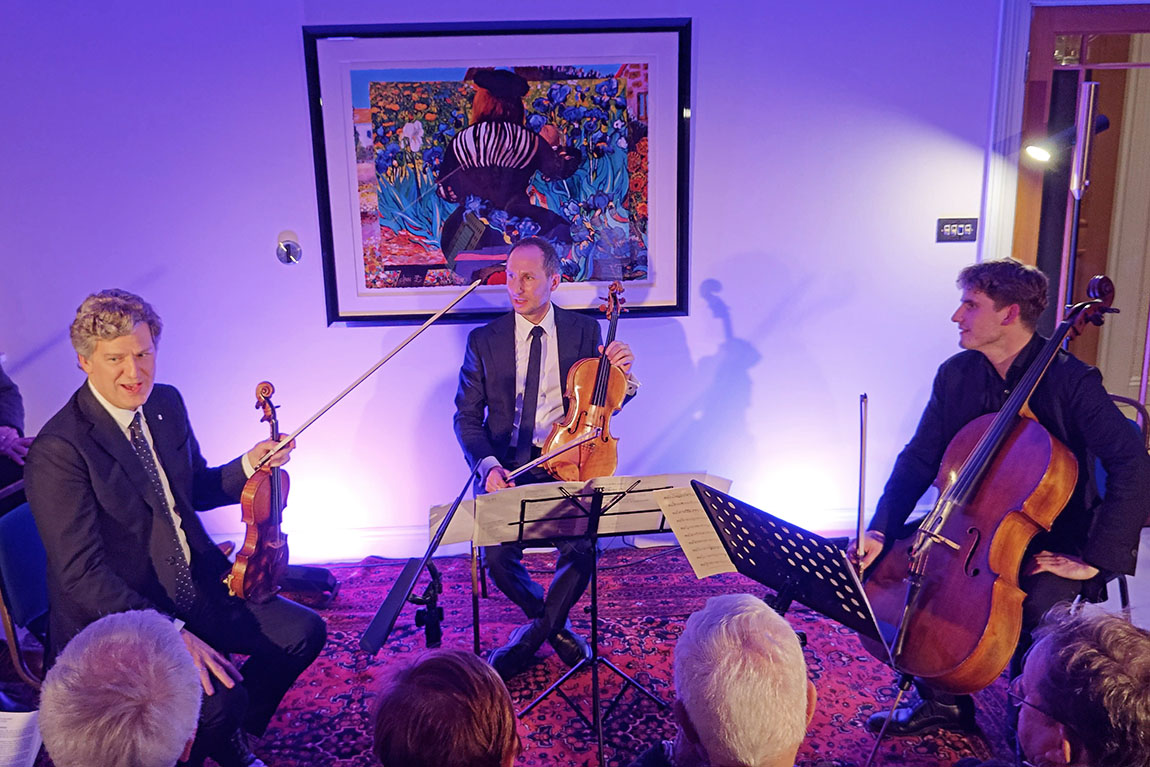
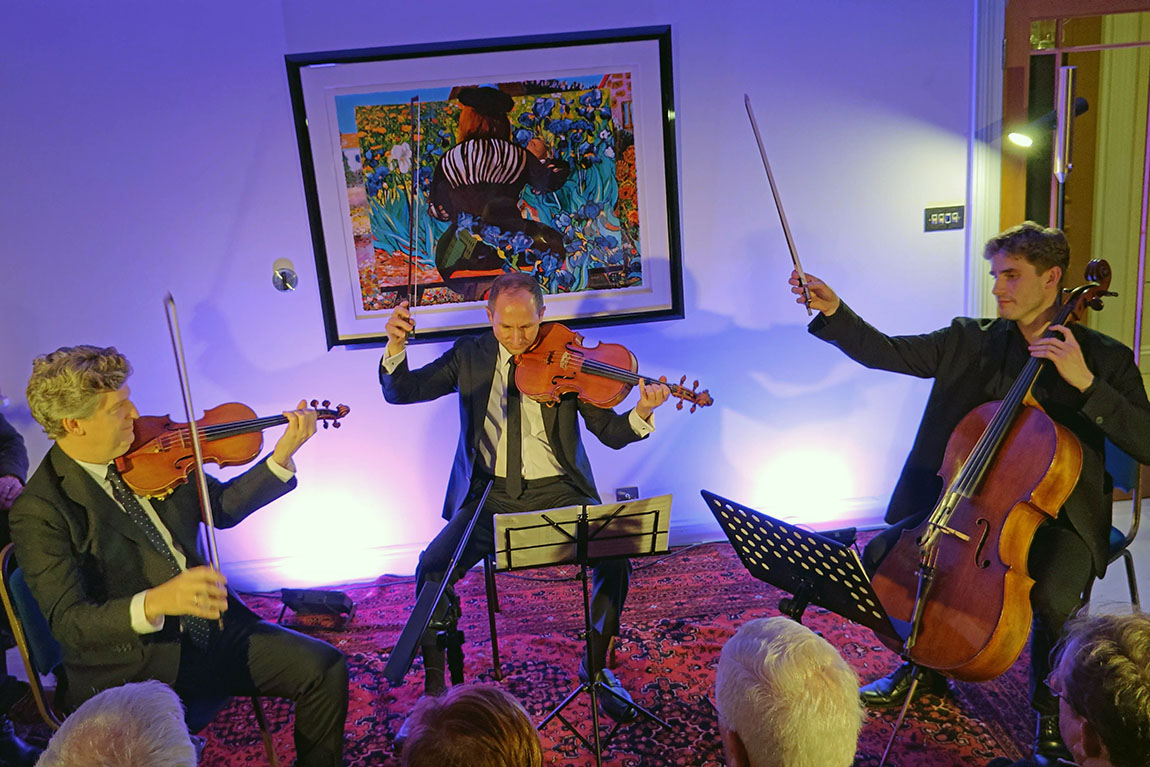
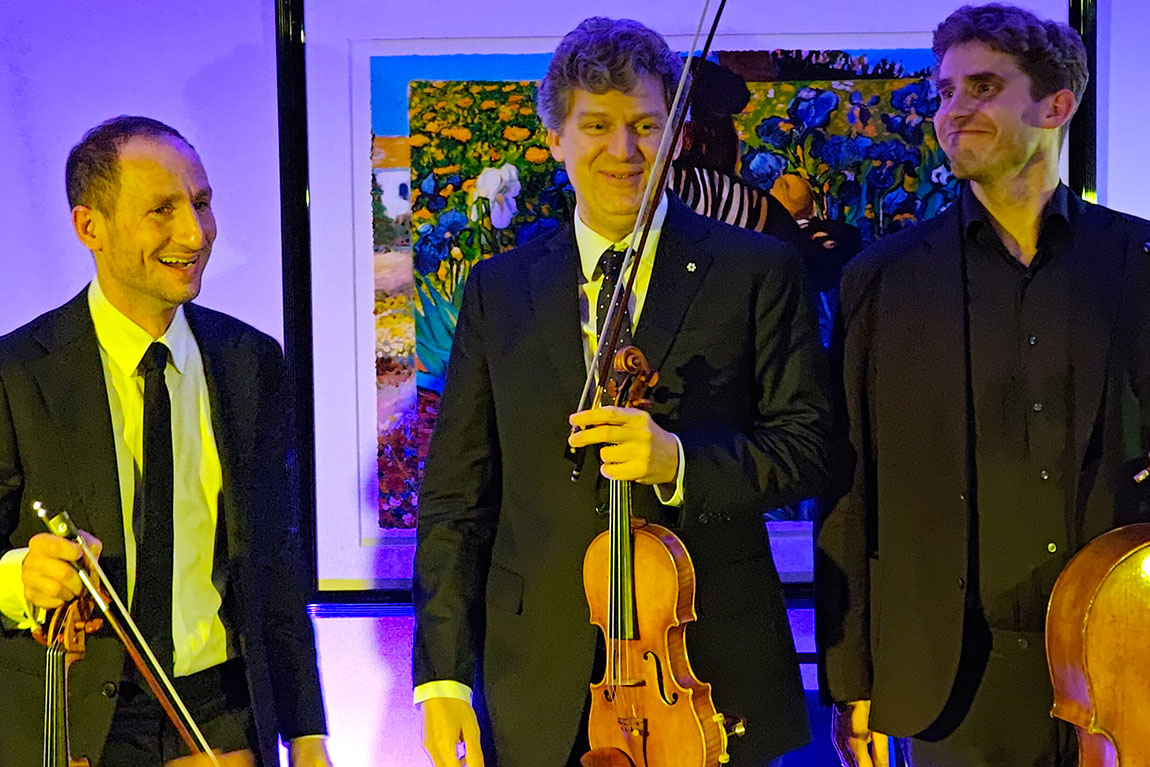
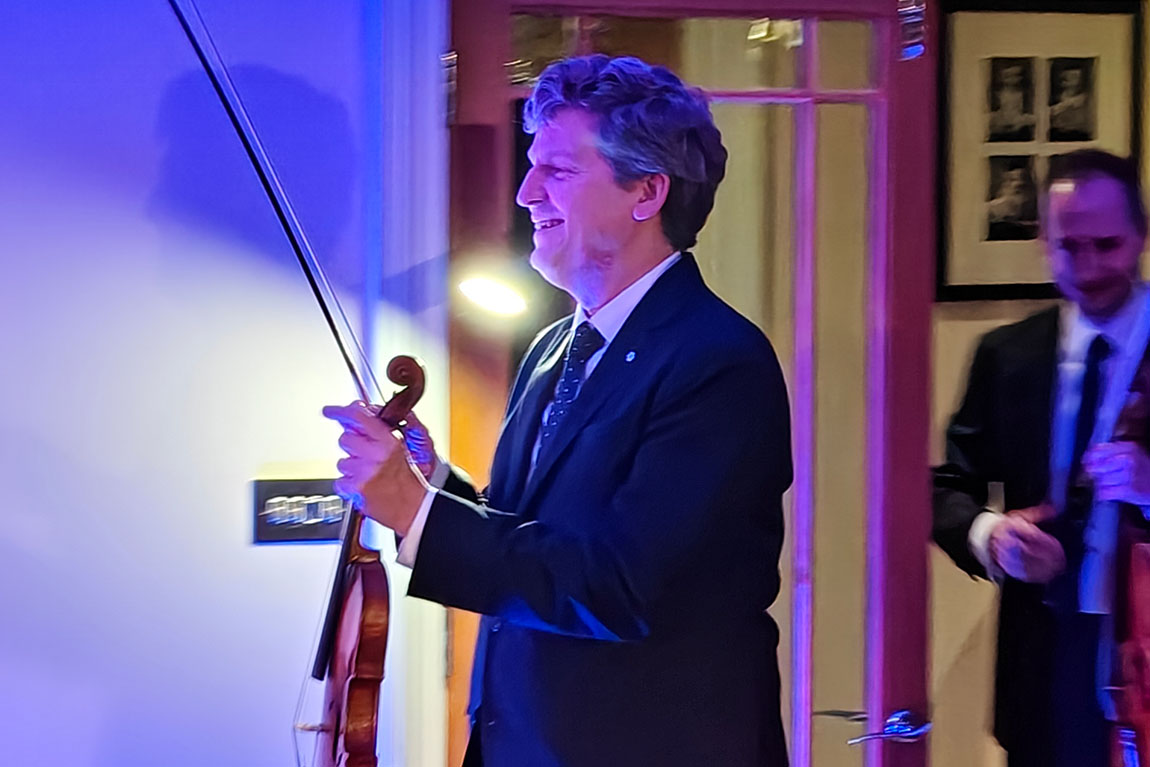
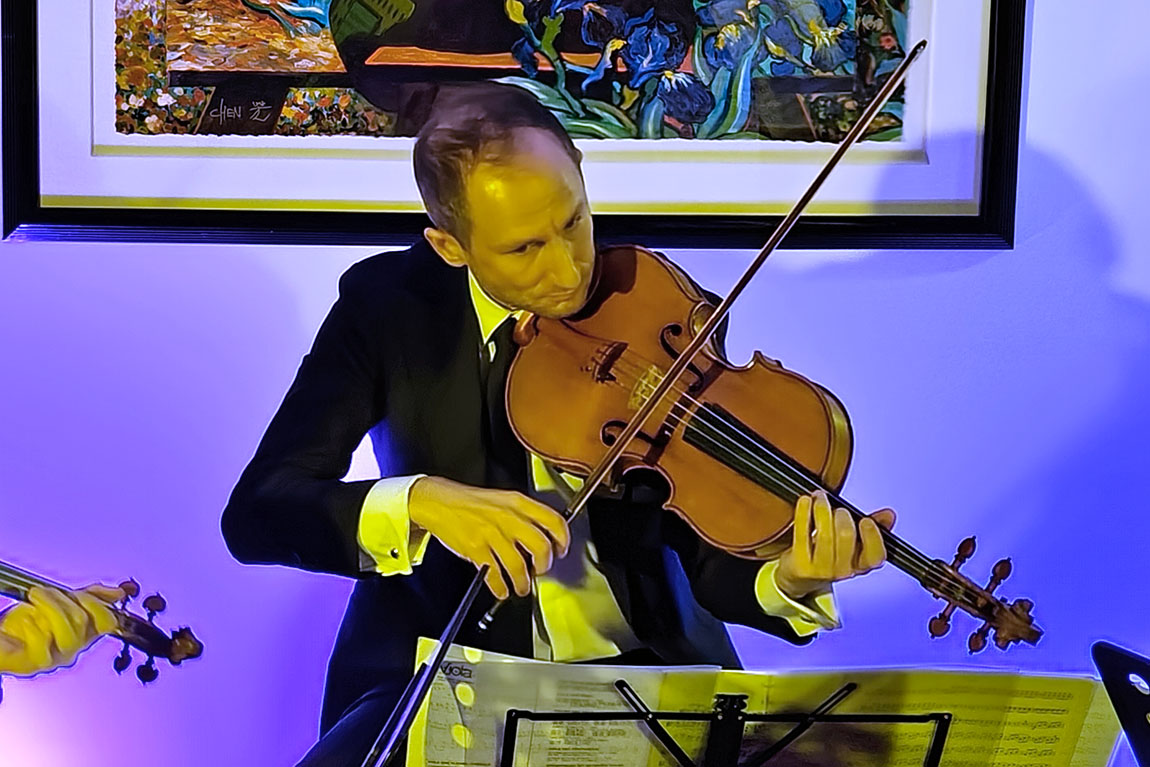
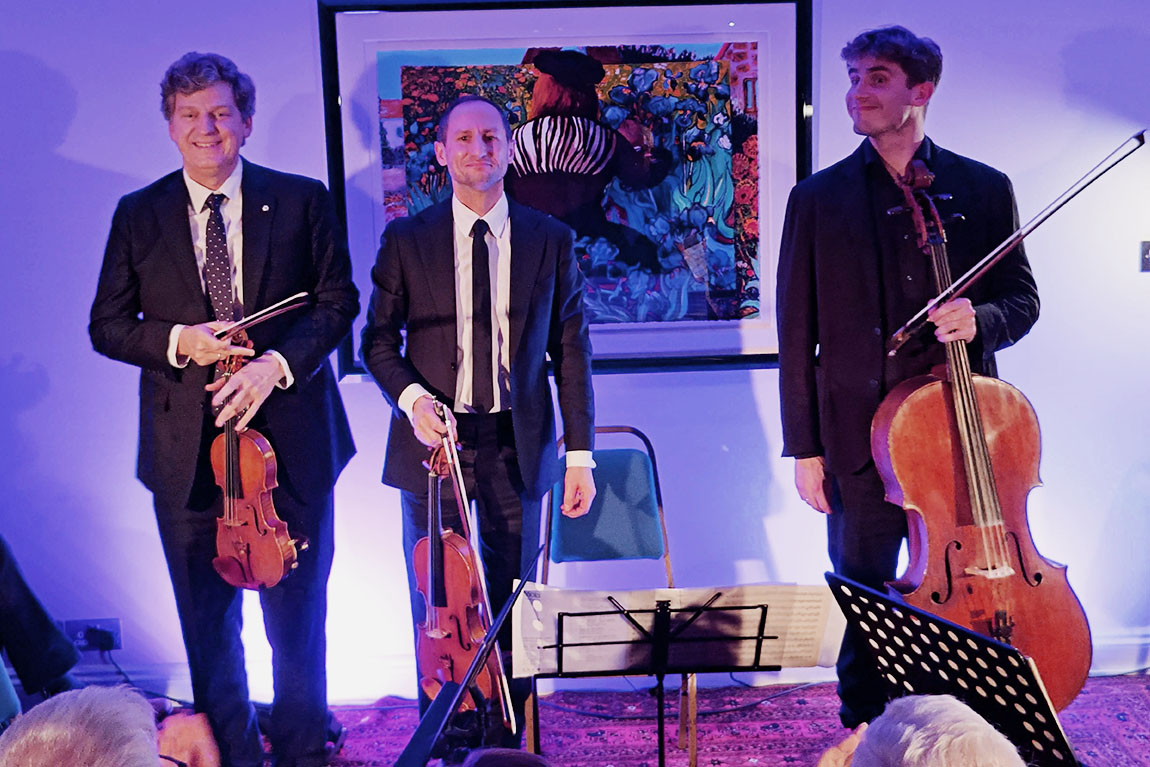
The root of performing music and three Strads.
“Congratulations,” said James to me, after the recital. “Congratulations on what you do, on what you have created. It is really special, because this is ultimately the root of what we musicians are doing, but there aren’t many places that provide it.” James gorgeously summarized Breinton’s existence in a short sentence. It was the most joyful moment for me – to receive a comment like this from James Ehnes, the violinist on top of his game, who travels all around the globe performing on all of the most prestigious stages. Breinton achieves a magically intimate set-up where the musicians perform to a small-sized but enthusiastic crowd and connect with them. Using Antoine’s words, “Your audience became part of us”. We feel proud of what we have built up in our community with huge support from our dedicated audience members.
There is a first time for everything, but this evening we experienced two ‘firsts’. One, we had never invited a string trio (violin, viola and cello) – this marvelous yet somewhat rare combination of instrumentation. Second, three Stradivari in one concert! What is the chance of experiencing three precious instruments in someone’s living room turned into a concert room? And the experience was intense and deeply engaging. I won’t be exaggerating saying that it was one-in-a-lifetime opportunity. (By the way, Antoine’s viola was made in the 1680’s, a good 100 years older than Mozart’s Divertimento.)
We were immediately struck with gorgeousness of the striking opening of Dohnanyi’s Seranade – the energetic harmony immediately resonated with our senses, and it was as if we were swept off our feet. Vivid and visual, simple but sophisticated, every movement created a different ambience. As James, Antoine and Andreas wove their lines in and out, one could not stop being amazed by the beautiful creation of the sounds – one moment crisp and transparent, the next moment soft and gentle as if touching a silk scarf.
The Divertimento was simply the biggest joy; sunny, warm, charming and witty. How nice it would be if our life flowed like that! Our programme note suggests that "the three instruments – violin, viola and cello – exchange ideas in perfect balance, each taking its turn to shine", and "the six movements where every second rises to the highest levels of textural gorgeousness and supreme melodic inspiration". It was exactly that. There was not a single second out of place. We thoroughly appreciated the incredible tone and texture, and the impeccable ensemble fulfilled by the musicians (which sometimes must be difficult when the musicians are individually such established soloists!).
This evening’s repertoire together with the three superb musicians and their instruments gave us an unpreceded level of happiness, which won’t be easily surpassed. And they completely turned our old-fashioned notion that "the viola is a boring instrument" upside down!
Dohnányi: Serenade
Dohnányi composed this Serenade in 1902, when he was twenty-five years old and newly established as one of the most gifted musicians in Central Europe. A pupil of István Thomán at the Budapest Academy, and a protégé of Johannes Brahms, Dohnányi was already admired as a pianist of dazzling technique and intellectual refinement. His early compositions showed the influence of Brahms and Schumann, but also an independent voice marked by clarity, lyricism, and a subtle wit. The Serenade for violin, viola, and cello, written during a stay in Vienna, confirmed his reputation as a composer of distinction and remains one of his most enduring works.
The title recalls the Classical serenade, a genre often associated with open-air performance and light entertainment. Dohnányi retains the outward form of that tradition while transforming it into something more tightly argued and inward in spirit. His Serenade consists of five concise movements, each vividly characterised yet bound together by motivic and rhythmic links. The opening Marcia begins with a jaunty theme that immediately establishes both energy and charm. The writing is alert and contrapuntal, the three instruments constantly exchanging ideas. Beneath the genial surface lies a discipline that reflects Dohnányi’s deep study of classical models.
The Romanza that follows provides lyrical contrast. The viola introduces a warm, singing melody that unfolds with quiet expressiveness. Its simplicity conceals sophisticated harmonic movement, and the cello and violin weave lines of tender counterpoint. The atmosphere recalls Brahms, yet the voice is Dohnányi’s own: youthful, passionate, and poised. The Scherzo bursts in with a sudden rush of energy. Its rhythmic playfulness, sharp accents, and teasing exchanges reveal the composer’s sense of humour, while the central trio section relaxes briefly into smoother contours before the return of the opening bustle.
At the centre of the work stands the Tema con variazioni, a movement of both intimacy and invention. A tranquil theme serves as the foundation for a sequence of transformations that range from meditative lyricism to brilliant virtuosity. The variations display Dohnányi’s compositional control and his fascination with texture. The melodic line passes fluidly among the instruments, while the harmony and rhythm shift continually in character. The movement encapsulates the composer’s ability to combine emotional sincerity with technical ingenuity.
The finale, Rondo (Allegro vivace), brings the work to an exuberant conclusion. Its buoyant theme, tinged with Hungarian rhythmic flavour, propels the music forward with irresistible momentum. The rondo’s recurring refrain alternates with episodes of contrasting mood, at times humorous, at times reflective, before gathering force toward a brilliant close in C major. The structure is classical, but the spirit is Romantic, uniting tradition and personality with effortless grace.
Although written early in his career, the piece contains the hallmarks his mature style: finely wrought melody, transparent texture, and an unerring sense of proportion. He once described his approach to composition as a “search for beauty through simplicity,” and this work exemplifies that philosophy. It avoids sentimentality while embracing warmth, and it balances virtuosity with restraint.
In its clarity, wit, and emotional generosity, the Serenade bridges the nineteenth and twentieth centuries, standing as both a farewell to Romanticism and a prelude to modernity.
Mozart: Divertimento
Mozart’s Divertimento, composed in September 1788, stands as one of the supreme monuments of chamber music. Despite its title, which implies light entertainment, the work is profound in conception and vast in scale. It is Mozart’s only complete string trio and one of his most extended instrumental compositions, unfolding across six movements that form an astonishingly varied and emotionally searching design.
The year 1788 was one of both inspiration and hardship for Mozart. Within a few months he composed his last three symphonies and this expansive trio, works that share the same sense of perfection balanced by human fragility. Financial pressures and personal challenges were mounting, yet his creative imagination seemed boundless. The Divertimento distils the expressive range of the symphonies into an intimate dialogue between three players. It may have been written for his friend Michael Puchberg, a devoted supporter and gifted amateur violinist, and perhaps intended for performance in a domestic setting. Yet the music’s ambition far exceeds that of any salon piece.
The Divertimento opens with a confident, sunny theme that immediately sets a tone of warmth and poise. The three instruments — violin, viola, and cello — exchange ideas in perfect balance, each taking its turn to shine. The writing on this Allegro is full of clarity and grace, with flashes of humour and brilliance that remind us of Mozart’s easy mastery and charm.
The slow movement Adagio offers a moment of deep calm and beauty. The violin sings a broad, lyrical melody, supported by rich, mellow harmonies from the viola and cello. The result is intimate and heartfelt, full of gentle warmth rather than overt emotion. Mozart’s control of tone and texture gives the music an inner glow and a sense of serene dignity.
The first Minuet recalls the elegance of 18th-century dance but with Mozart’s distinctive liveliness. The rhythm is steady and graceful, yet touched with playful rhythmic shifts that bring the music to life.
The Andante unfolds as a set of variations on a calm and graceful theme. Each variation explores a new mood or texture — now gentle and lyrical, now lively and decorative — as the instruments trade the spotlight. The movement shows Mozart’s gift for variety and invention within perfect balance and proportion.
Mozart includes a second Minuet, this one a touch broader and more relaxed than the first. Its character is noble and unhurried, with a Trio section that brings a hint of rustic dance and earthy charm. Together they offer contrast and a brief moment of lightness before the brilliance of the finale.
The finale Allegro sparkles with energy and good humour. Quick, bright themes pass between the instruments in animated conversation, combining dazzling phrases with joyful spontaneity. Mozart brings the work to a spirited close, full of wit, warmth, and life — a fitting farewell to one of his most generous and radiant chamber masterpieces.

James Ehnes has established himself as one of the most sought-after musicians on the international stage. Gifted with a rare combination of stunning virtuosity, serene lyricism and unfaltering musicality, Ehnes is a favourite guest at the world’s most celebrated concert halls.Recent and upcoming orchestral highlights include the Royal Concertgebouw Orchestra, Tonhalle-Orchester Zürich, NDR Elbphilharmonie Orchestra, London Philharmonic Orchestra, NHK Symphony, LA Philharmonic, Boston Symphony, Chicago Symphony Orchestra, and Cleveland Orchestra.

Antoine Tamestit stands as a singular voice in the world of classical music, redefining what it means to be a viola player in the 21st century. He has captivated audiences and critics alike, bringing a fresh perspective to both beloved masterpieces and contemporary works. His unique artistry, marked by an unparalleled sensitivity and a profound connection to his instrument, places him among the most distinguished musicians of our time.

Andreas Brantelid was born in Copenhagen in 1987 to Swedish/Danish parents. After receiving early tuition from his father Ingemar, Andreas made his soloist debut at the age of 14 in a performance of the Elgar concerto with the Royal Danish Orchestra in Copenhagen. Today, Andreas is one of the most sought-after performing artists from Scandinavia, winning worldwide critical acclaim for his ability to make the music not only sound, but both speak, dance and sing.