
Kumi's Review
People may think I select and put on recitals throughout the season at random, as they come and without much policy – and that is often true! But I also have a few projects on the go. One of them has been to bring Brahms’ Handel Variations to Breinton – and it finally happened!
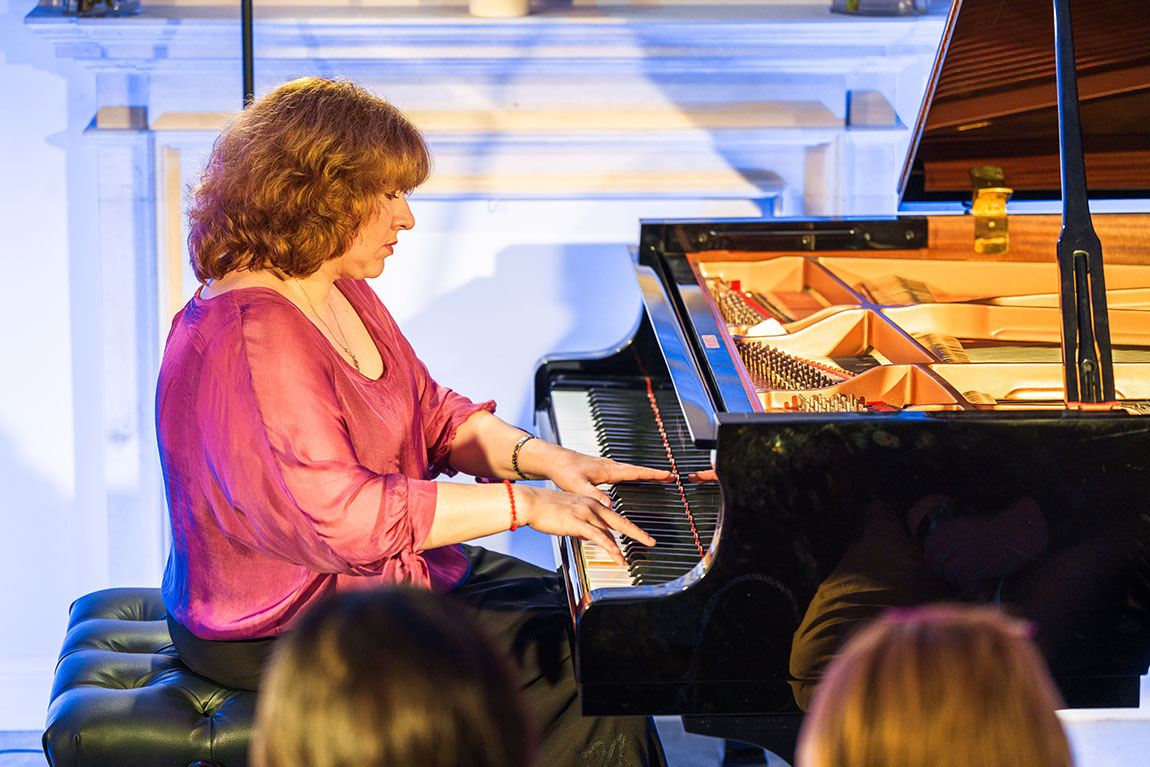
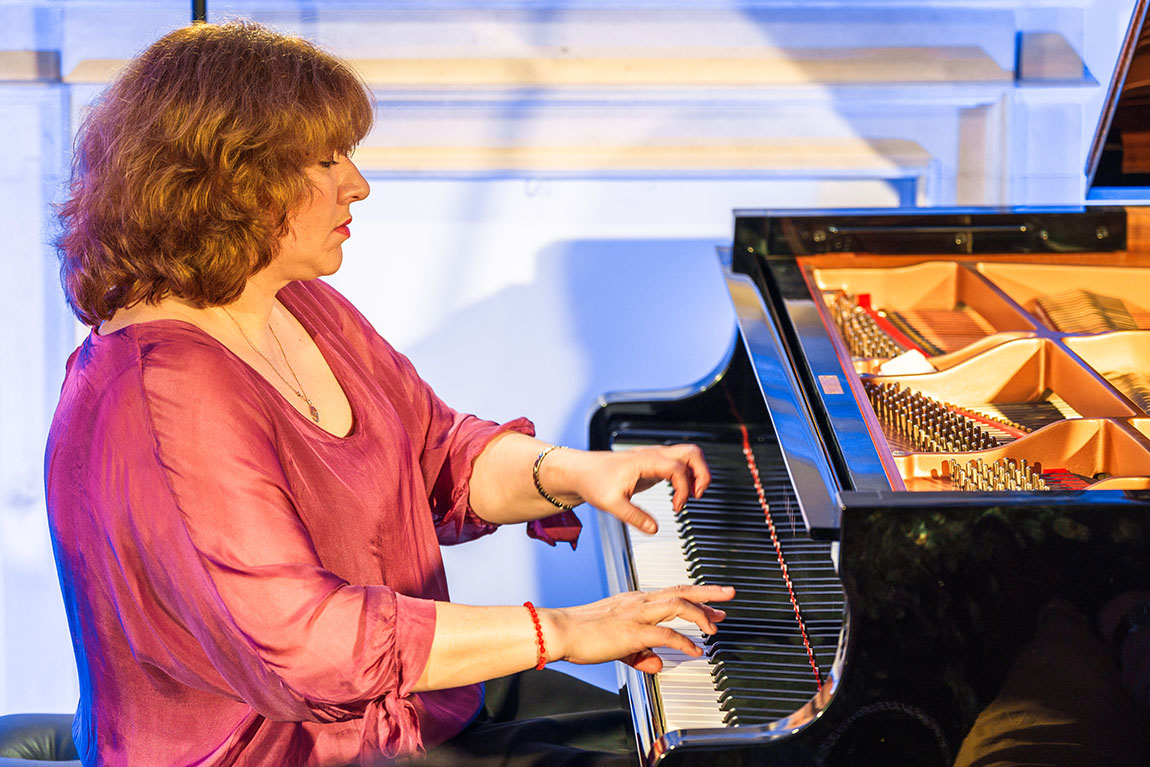
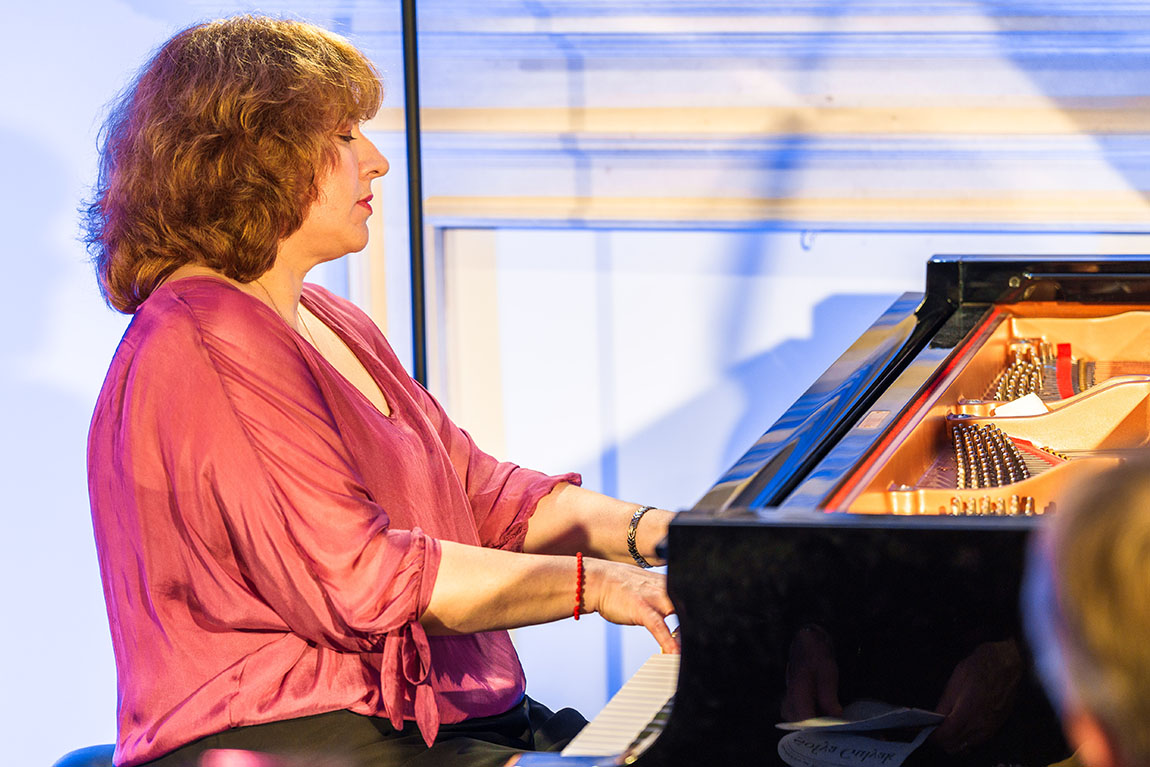
I have always liked ‘themes and variations’ works in classical music, and I count Brahms’ Handel Variations as one of the finest sets of piano variations. It starts off with a plain aria, but what follows are extraordinary ideas in dazzling variety. If Brahms was the great composer of this masterpiece, then Sofya Gulyak was its perfect exponent.
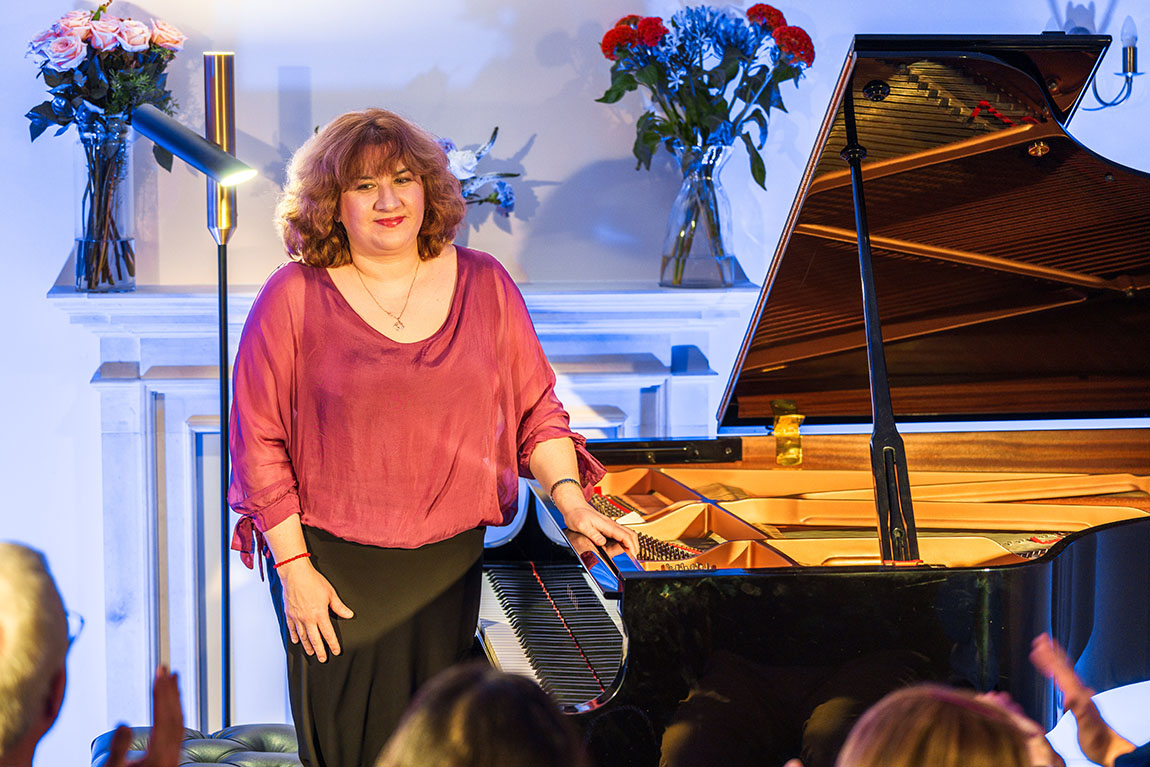
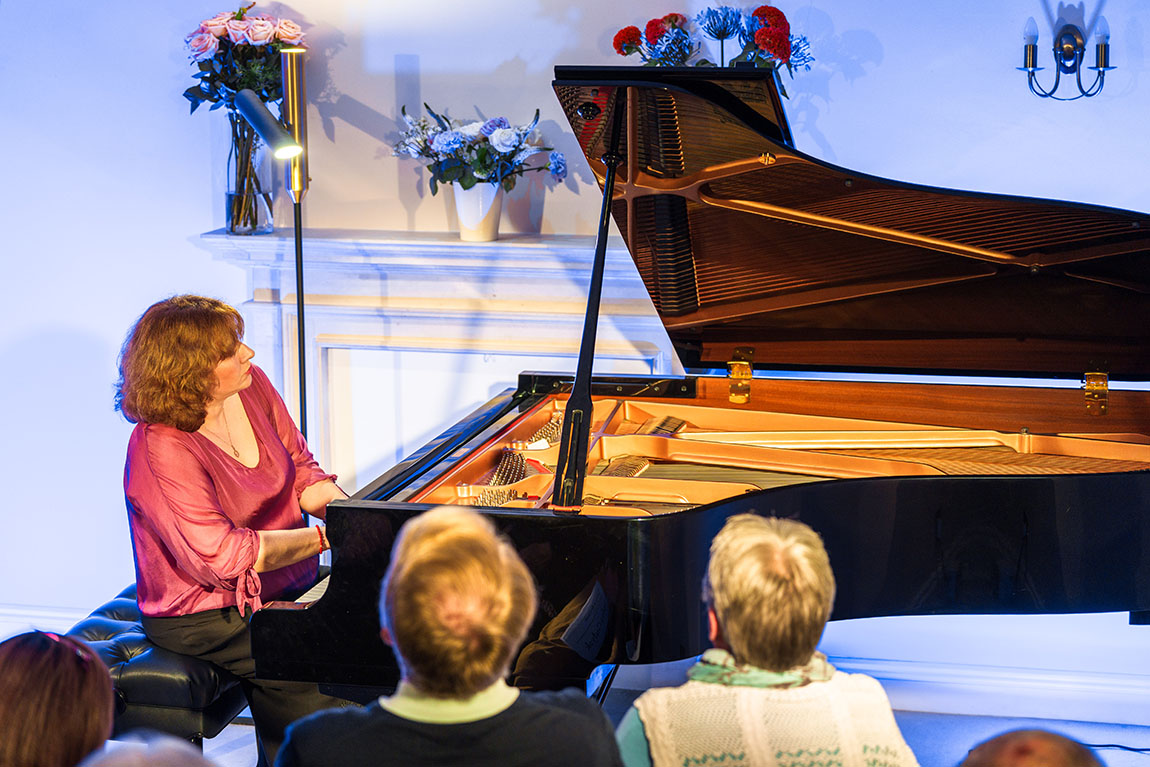
There were so many things she excelled at, for instance: the beautiful intensity that kept us on the edge of our seats; sounds with depth and warmth throughout, however powerful they were; solid ideas and broad knowledge, bridging old-school Baroque techniques – such as canons, a siciliano, a musette, and pedal points – with the sweeping emotional force and massive piano writing of the Romantic era; and the ability to capture a wide spectrum of moods and spirits, from playful to elegant, thunderous, lyrical, and distant bell-like textures. Her unflinching approach brought fresh energy, imagination and dynamics, as well as an emphasis on subtleties. All we needed to do was sit back and let Sofya unfold the gorgeous voices one by one.
The first half of the programme was ‘old forms given new life’, based on Handel’s melodies. The second half was devoted to dances written by Franz Liszt throughout his life. The waltz, mazurka and polonaise were full of swirls and charm. And Liszt’s phenomenal Tarantella, in which Sofya displayed unfailing articulation in a fiery, relentless dance, closed the programme on a high note.
Rachmaninov’s Élégie was played as an encore, as if in silent worship after the thunderous storm.
Programme
-
Franz Liszt
-
Sarabande and Chaconne (from the opera "Almira" by G. F. Handel), S.181
-
-
Johannes Brahms
-
Variations and Fugue on a Theme by Handel Op. 24
-
-
Franz Liszt
-
Valse Impromptu, S.213
-
Mazurka brilliante
-
Mazurka (for piano composed by an amateur from St. Petersburg), S.384
-
Polonaise No. 2, S.223/2
-
Valse oubliée No. 1, S.215/1
-
Tarantella (from “Venezia e Napoli“), S.162/3
-
Sofya's Biography
In September 2009 Sofya Gulyak was awarded the 1st prize and the Princess Mary Gold Medal at the Sixteenth Leeds International Piano Competition – the first woman in the history of the competition to achieve this distinction. Since then she has appeared all over the world to great acclaim. Her recital programmes are frequently reviewed in superlatives, and her concerto appearances with major orchestras are noted in glowing terms by the world’s music press. Sofya has been praised for her "tremendous precision and colouration...exquisite soft playing ...with delicacy" and described as a “Rach star"(Washington Post).
Sofya Gulyak’s resume includes prizes from many prestigious piano competitions: she is a 1st prize winner of William Kapell International Piano Competition in the USA, Maj Lind Helsinki International Piano Competition, Tivoli Piano Competition in Copenhagen, Isang Yun International Piano Competition in South Korea, San Marino Piano Competition, winner of Busoni Competition in Italy and prize winner of Marguerite Long Piano Competition in Paris.
Recitals and concert appearances have been numerous, with Sofya Gulyak having performed all over the globe in such venues as La Scala Theatre and Sala Verdi in Milan, Herculessaal in Munich, Salle Cortot, Salle Gaveau and Salle Pleyel in Paris, Tokyo Opera City Hall, Osaka Symphony Hall, Great Hall of Moscow Conservatory, Konzerthaus in Berlin, Gewandhaus in Leipzig, Kennedy Center in Washington, Hungarian National Opera, Palais de la Musique in Strasbourg, Hong Kong City Hall, Shanghai Grand Theatre, Musashino Cultural Centre in Tokyo, Finlandia Hall in Helsinki, Bridgewater Hall in Manchester, Teatro Municipal adn Cidade des Artes in Rio de Janeiro, Auditorium Manzoni in Bologna, Aberdeen Music Hall, Salle Molière in Lyon, Walt Disney Hall in Los Angeles, King Theatre in Rabat, Kursaal in Bern, Tivoli Concert Hall in Copenhagen and many others.
Sofya Gulyak appeared as a soloist with the London Philharmonic Orchestra, Finnish Radio Symphony, Saint-Petersburg Philharmonic, Rio de Janeiro Symphony, Royal Liverpool Philharmonic Orchestra, Hallé Orchestra, BBC Scottish Symphony Orchestra, Orchestra of Opera North, Budapest Philharmonic, Orchestra dell’ Arena di Verona, Orchestra Filarmonica di Bologna, NFM Wroclaw Philharmonic, Enescu Philharmonic, Stavanger Symphony, Deutsche Staatsphilharmonie Rheinland-Pfalz, Slovak Radio Symphony, Helsinki Philharmonic, Copenhagen Symphony, Ulster Symphony, Ochestra Sinfonica Siciliana, Orchestre National de France, Shanghai Philharmonic, Oulu Philharmonic, Leipzig Philharmonic, Pensacola Symphony, Tatarstan Symphony, Philippines Philharmonic, Morocco Philharmonic and others
She collaborated with conductors such as Vladimir Ashkenazy, Sakari Oramo, Mark Elder, Donald Runnicle, Vasily Petrenko, Alexander Lazarev, Karl-Heinz Steffens, David Hill, Alan Buribayev, Eiving Gullberg Jensen, Theodor Guschlauer, Rory McDonald, Tamami Nishimoto, Danail Rachev, Fabio Mastrangelo, Michele Mariotti, Fuat Mansurov, Alexander Sladkovsky, Mario Kosik, Jesus Medina,Tomomi Nishimoto, Istvan Denes, Peter Rubardt, Anna-Maria Helsing, Dalia Stasevska and others. The festivals in which Sofya Gulyak participated include Klavier Ruhr Festival, Chopin Festival in Duzniki-Zdroj, Festival du Sceaux, International Keyboard Festival in New York, International Strasbourg Festival, Busoni Festival, Harrogate Festival, Krakòv Piano Festival, New Zealand Piano Festival, Ravello Festival, Festival Chopin in Paris, Shanghai International Piano Festival and many others.
Sofya Gulyak’s recording of Russian piano music (Medtner, Rachmaninoff, Prokofiev) was released on Champs Hill Records in 2013 and received a 5 stars review in Diapason magazine (“What a pleasure to hear the piano blossoming and projecting in the most vivid of ways when played by Sofya Gulyak. The singing sound alongside dazzling and powerful execution distinguishes an outstanding natural pianist”) and praising reviews in Gramophone (“This is a stunning debut album…”) and Guardian magazines (“Sofya Gulyak is a fearless pianist, never afraid to scale the most technically demanding heights of the repertoire and equally proud to wear her heart on her sleeve”). Her CD with Brahms music was released on Piano Classics in the spring of 2015 and got glowing reviews from American Record Guide ("The Handel Variations is among the top contenders on record. From the very first notes she takes charge and envelops us in a thrilling sequence of variations that will send goose bumps to susceptible listeners. Not only does she perform with arresting contrast and lovely, soft floating tone. She keeps you on the edge of your seat, as the music presses ever forward. Sometimes I was reminded of the young Argerich.." and Fanfare magazine (" Her musicality is beautifully attuned to the spirit of Brahms...I must praise Kazan-born Russain pianist Sofya Gulyak, whose impressive reading places a stronger emphasis than Perahia's in the continuity of the variations... She is a natural Brahmsian whatever his moods."). Her last CD with the Chaconnes for Piano was released by Champs Hill Records in 2017.
Sofya Gulyak is a native of Kazan (Russia) where she studied in a Special Music College under Nailya Khakimova, and then in Kazan State Conservatoire under Professor Elfiya Burnasheva. After that she continued her studies at the Piano Academy "Incontri coi Maestri" (Imola, Italy) with Boris Petrushansky and at the Royal College of Music in London with Vanessa Latarche.
Sofya Gulyak attended as a jury member the International Piano Competitions in Italy, Serbia, France, Greece, USA, and was invited to teach master classes in China, Italy, Australia, New Zealand, Philippines, Hong Kong, Mexico, USA, and Germany. In past and recent years she has been on the faculty at the Royal College of Muisc in London, Kazan State Conservatory, Monteverdi Conservatory of Bolzano.
Her playing has been broadcast on radio and TV in Russia, Poland, France, Italy, Germany, USA, Finland, Denmark, Serbia, New Zealand, Brazil, Mexico, and the United Kingdom (BBC 3 and BBC 4).
Programme Notes
Liszt: Sarabande and Chaconne from Handel’s Almira
Written in 1879 for his English pupil Walter Bache to play at a Handel festival in England, this is the only piece from Liszt’s last years to take its material from the Baroque. Handel was about nineteen when he composed Almira, his first opera, first staged in Hamburg in January 1705, and Liszt was nearing seventy when he turned two of its dances into a piece for the piano. He did not simply copy them out. The two dances are rearranged and each becomes a set of variations: the sarabande, slow and dignified, and the chaconne, which circles over a bass line that keeps returning like a refrain.
Handel’s melodies stay recognisable, but they are dressed in a pianist’s colours. The result is a teenager’s music seen through the eyes of an old man.
Liszt’s own late music had by then turned bare and strange, and here he went back instead to the clear lines of a much earlier world. It was published in 1880 with a dedication to Bache.
Brahms: Variations and Fugue on a Theme by Handel
Presented to Clara Schumann on her forty-second birthday, this set of variations began as a gift. Brahms was twenty-eight, and Clara, the widow of Robert Schumann, was the friend closest to him. The manuscript was inscribed to a beloved friend, and the piece was published without a dedication. Clara gave the first performance in Hamburg on 7 December 1861 and repeated it soon afterwards in Leipzig. She is said to have been very nervous beforehand, but the piece was warmly applauded, and it was published by Breitkopf and Härtel the following summer.
The theme comes from a keyboard suite by Handel, an aria so plain that Handel himself had added only five variations to it. Brahms owned a copy of the 1733 first edition, and the work shows how closely he had studied the music of Handel’s age: it borrows its canons, its dances and its fugue from the Baroque. He keeps the tune’s shape like a skeleton while changing everything around it, twenty-five times over. The early variations are brisk and sprightly, one a showpiece in rushing octaves. Two are canons, in which one line chases another across the keyboard. A dark minor-key variation sounds to some listeners like a Hungarian funeral march. Others are gentler: a rocking siciliana, an old pastoral dance, and a variation with a drone beneath it that has often been called the musical-box variation. Towards the end the textures thicken until the piano begins to sound like an organ. Throughout, Handel’s upright tune stays audible underneath, which is what holds the set together: however far the mood travels, the listener can still hear where it started.
A fugue crowns the set. Its subject is made from the opening step of Handel’s own tune, and it is worked with every Baroque device Brahms could muster, with entries piled on top of one another, before the music settles over one long held note in the bass and builds to a climax of great weight.
Brahms played the work for Wagner when the two first met in 1863, and Wagner is reported to have been impressed at what could still be done with the old forms. The piece has since had a life beyond the piano, in an orchestral version by Edmund Rubbra, made in 1938, and in a ballet by Jerome Robbins that is set to it. It remains one of the most substantial works Brahms wrote for solo piano before he turned thirty, in a decade when he was testing himself against the great forms of the past, years before he risked a symphony.
Liszt: Valse-impromptu
Published in 1852, this grew out of an earlier piece called the Petite valse favorite and was reshaped during Liszt’s years in Weimar. The title promises something made up on the spot, and the music keeps that promise: a light, quick-footed waltz in the manner of the salon, in which the dance steps keep breaking into flurries of decoration, as if the pianist could not resist improvising a little more. Liszt returned to the piece late in life and made a longer version around 1880.
Liszt: Mazurka brillante
Dedicated to Adam Kozuchowski and published in 1850, this is Liszt’s only original contribution to the genre. The mazurka was Poland’s dance, and Chopin had made it a form for the concert hall, so Liszt was working in the shadow of a friend, and a few years later he would write a book about Chopin. His own version is outgoing rather than intimate. It is a bright concert piece, with enough of the dance’s lilting rhythm and Polish flavour to be convincing, and enough sparkle to make it a showpiece.
Liszt: Mazurka for piano composed by an amateur
This is not Liszt’s own tune, as its title says. The first edition does not name the composer, and the name has never been settled. Mikhail Vielgorsky, a Russian count and enthusiastic amateur, is one suggestion, though no firm evidence has been found. Liszt kept the tune and dressed it for the concert platform, so that a modest dance from a drawing room in the Russian capital is turned into a miniature display piece.
Liszt: Polonaise No. 2
The second, and more famous, of a pair; the first is a melancholy piece, this one is brighter and grander. The polonaise began as a stately, processional dance of the Polish nobility, and Liszt keeps its ceremonial stride, with ringing chords and a confident, rising swagger, lit up here and there by brilliant runs. In a programme full of dances, it is the most openly festive.
Liszt: Valse oubliée No. 1
Composed when Liszt was 70, this was the first of four waltzes that share a title meaning “forgotten waltz”, a name he used in a letter to his publisher. It was the only one of the four to be published at the time. The music recalls the charming piano waltzes he had written as a young man, but it looks back with a mixture of nostalgia and irony. A graceful tune seems to half-remember itself, and the harmony keeps slipping sideways into odd, unexpected places. Set beside the Valse-impromptu of nearly thirty years earlier, it shows how differently the same dance could sound to a man in old age.
Liszt: Tarantella from Venezia e Napoli
Revised in 1859 from music that Liszt had first sketched in the late 1830s, the Tarantella was published as part of a supplement to his Années de pèlerinage, the collection of piano pieces inspired by his travels. It takes its tunes from Neapolitan street songs, collected by the musician Guillaume Louis Cottrau. The tarantella is the dance of southern Italy, and folklore says it was a cure for the bite of a spider, danced faster and faster until the poison was sweated out. Liszt keeps that sense of mounting frenzy. The music spins forward at a headlong pace, interrupted only by a slower, wistful song, before the whirl begins again and carries the evening away.