Kumi's Review
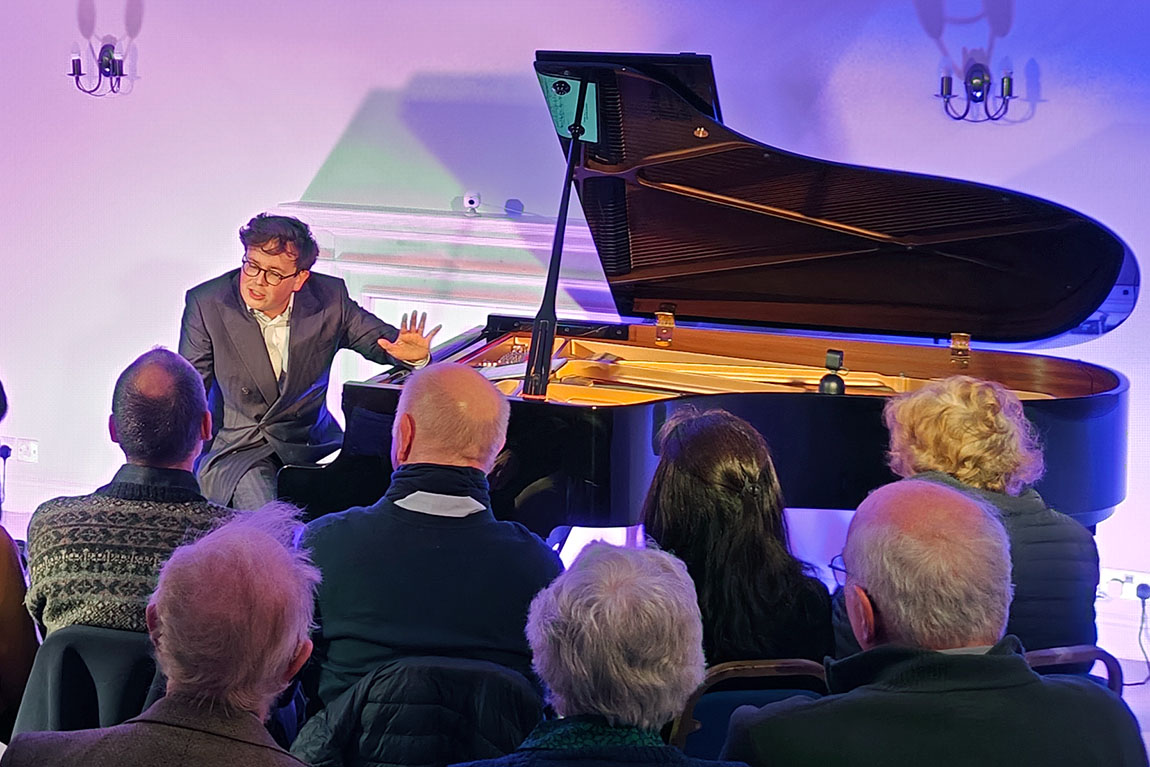
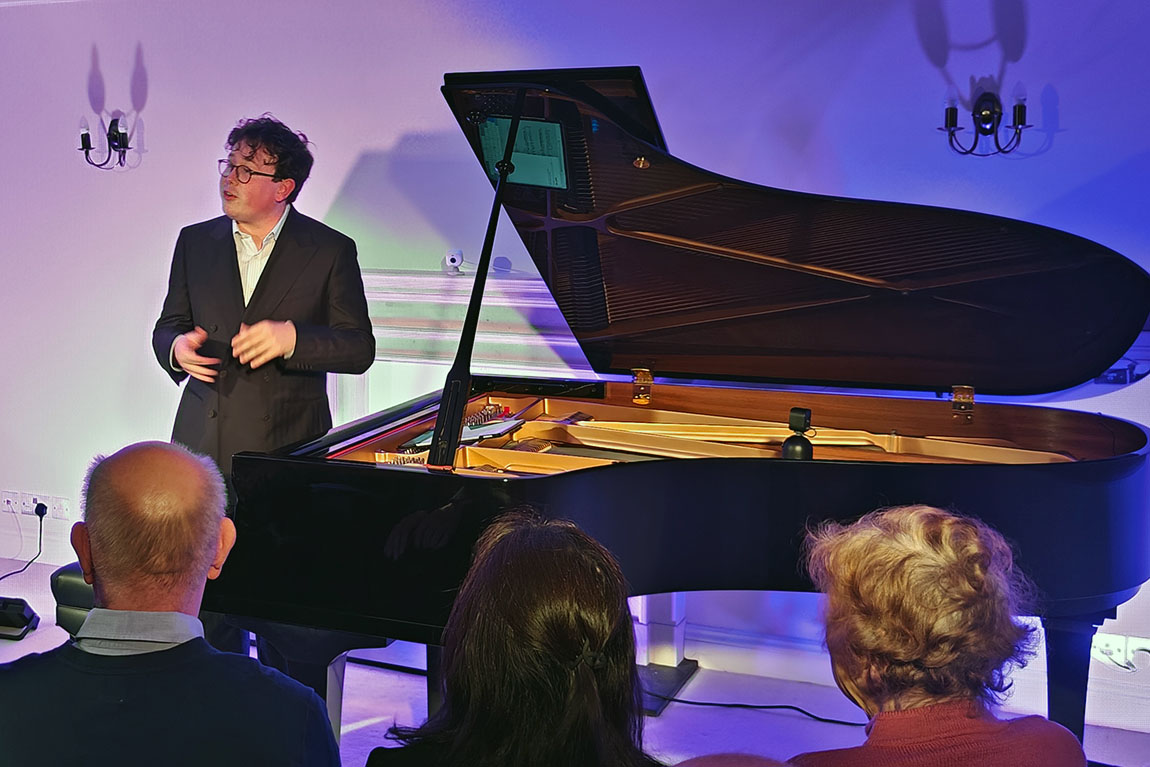
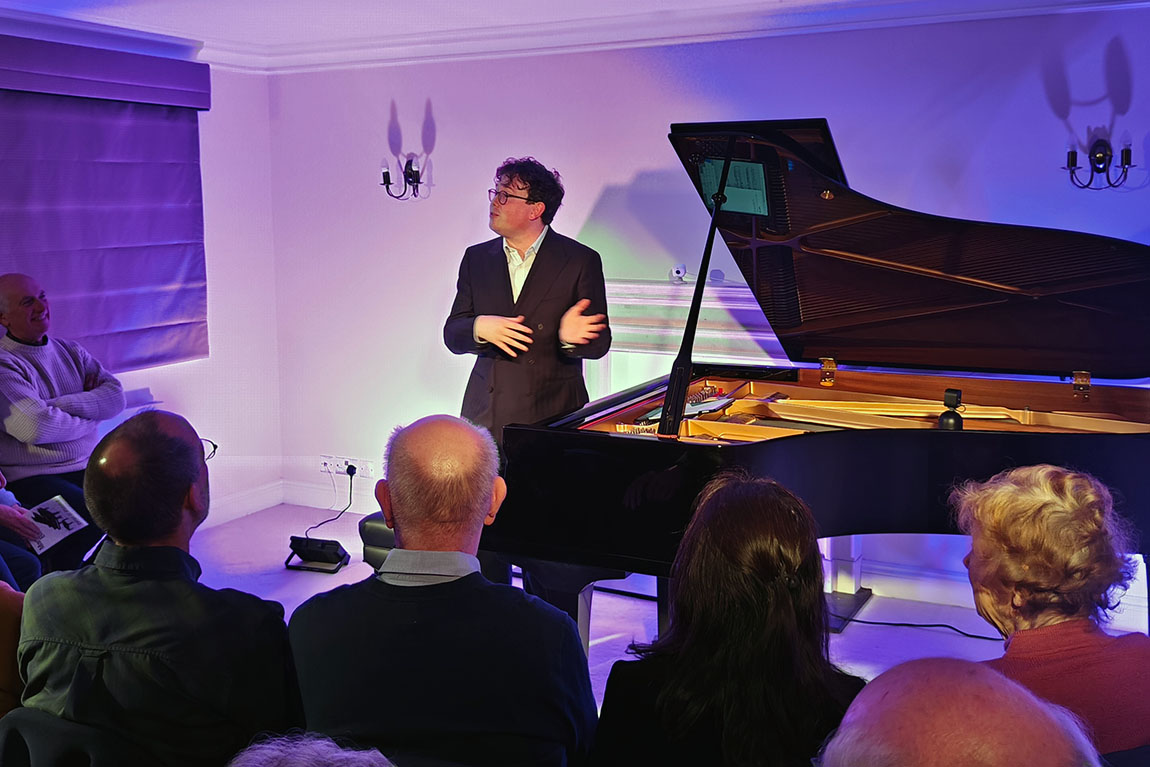
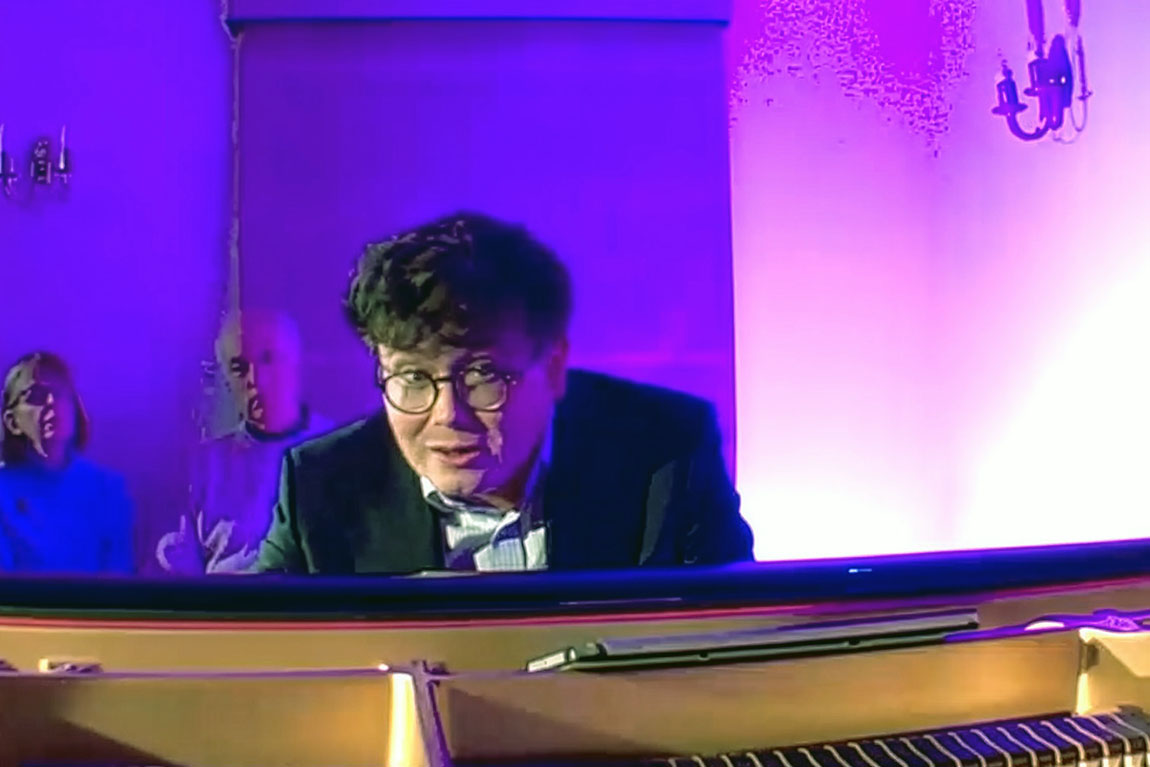
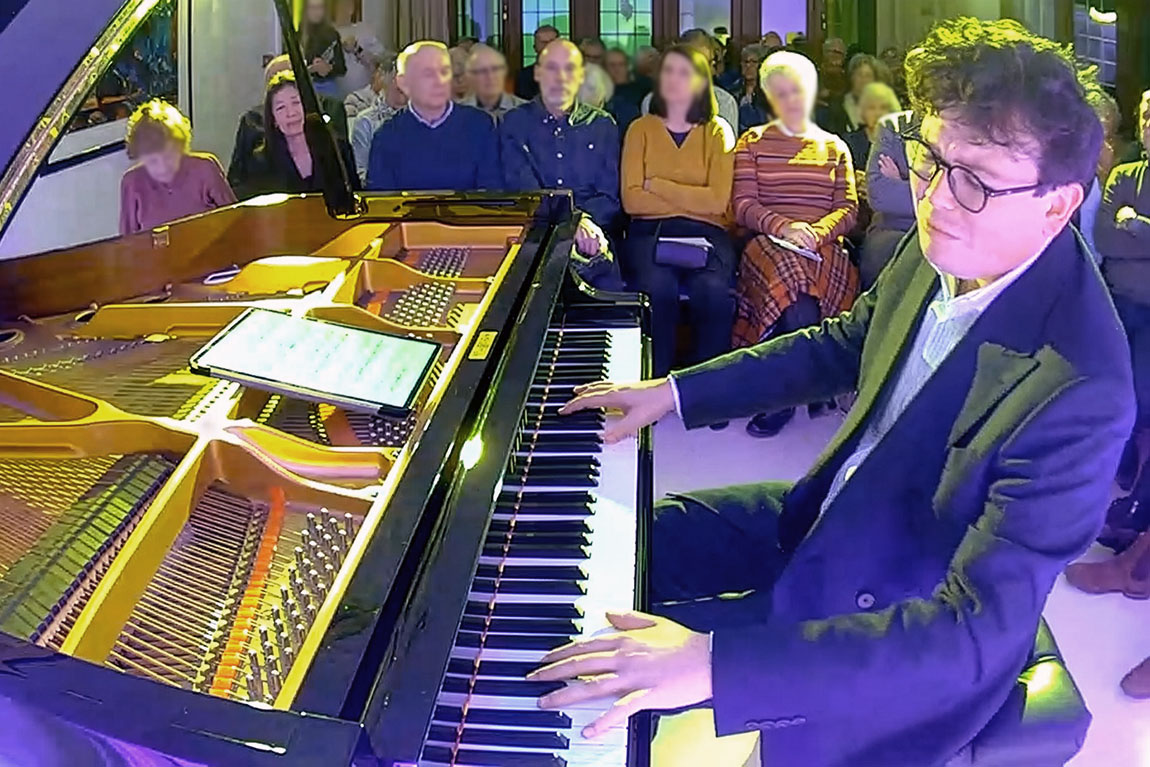
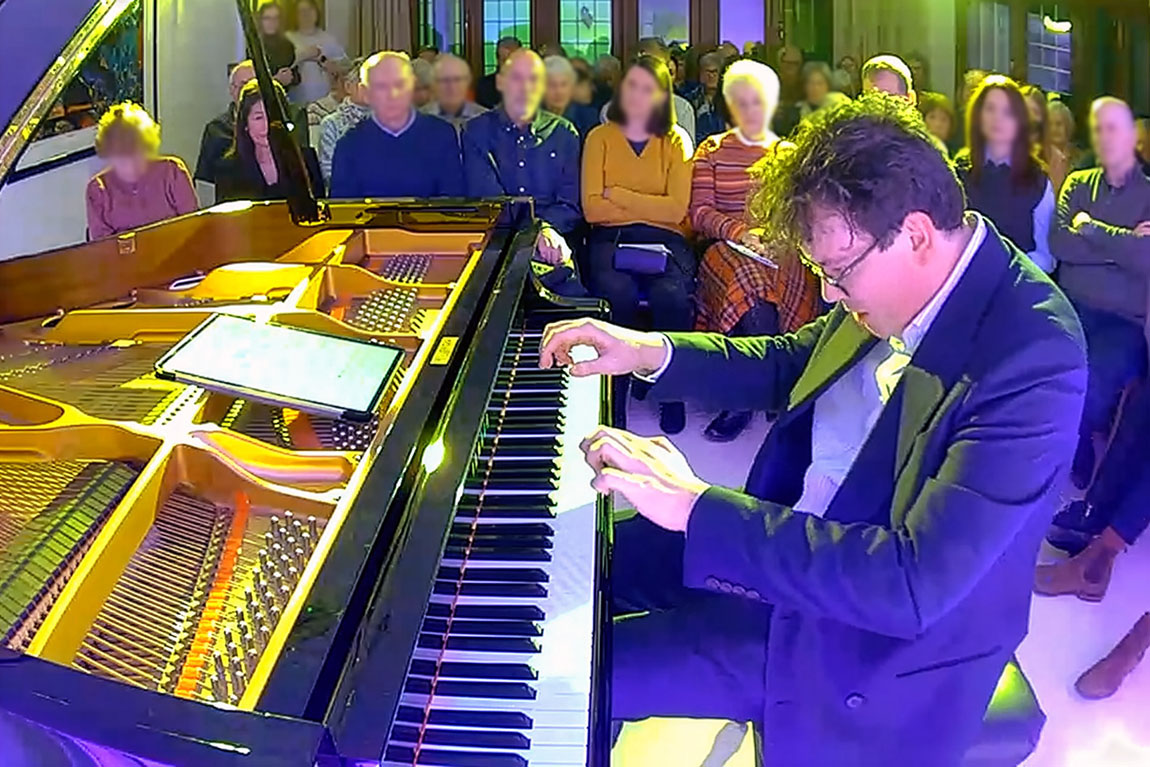
Martin James Bartlett’s mere presence immediately lights up the stage. He puts a smile on your face even before placing his fingers on the keyboard. He knows where he belongs, and he is totally comfortable with it. Then he starts to play – from then on, he takes complete charge. He embraces the audience with music which is dear to him. His crafting interpretations, fearless technique, bold approach and ability to create endless tone colours all contribute to his music, which speaks directly speaks to the heart.
The succession of three short works by Bach were a bliss. Well, technically it was not entirely Bach alone; in Bach-Busoni’s Wachet auf, ruft uns die Stimme, we heard the chorale lines exquisitely voiced; the tones expanded unlimitedly in a processional calmness, which sustained the majestic beauty. In Siciliano from the E flat Flute Sonata, arranged by Kemp, Martin offered an angelic melody hovering freely with a most transparent texture. Toccata’s bold opening, unfolding with a complete shift in tones, was freshly welcomed. Martin’s fantastic articulation kept the harmonic tension high, while the closely woven lines created joyful intensity.
Martin’s crafting interpretations shone in Mozart’s A major Sonata; the Turkish March like we’ve never heard before. Played with the clearest and most transparent tones, Martin’s rendition of the famous third movement was full of playful, cheeky even, improvisations. One could not help thinking that we were undoubtedly hearing Mozart’s work, but it was also totally Martin’s creation. The first movement’s variations were pleasantly unique as well – no repeats were played the same. We looked forward to what we were going to encounter next.
The second half of the programme by Liszt, Granados and Scriabin saw a significant change in character from the first half. Swapping simplicity and cuteness with considerable virtuosity and artistic challenges – a contrast the audience welcomed. All gorgeously performed, but the piece that stood out for me was Scriabin’s Sonata No. 4. It was radiant, the mood and sounds forever soaring high, creating images of ascent towards the bright light the composer was searching for. Just as Scriabin described in his poem, "It is towards thee, adored star, My flights guides me".
Thunderous applause from the audience meant that we did not want Martin to leave the stage. He didn’t disappoint – in fact, he surpassed our expectations and proceeded to play Concert Paraphrase Soirée de Vienne, a thrilling piece by Strauss/Grünfeld to lift our spirited mood even higher, followed by an immensely touching rendition of Schumann’s Of Foreign Lands and Peoples from Kinderszenen. Martin certainly knows how to own a stage.
Martin's Biography
Martin James Bartlett possesses a fearless technique and plays with a maturity and elegance far beyond his years. The British pianist is the inaugural recipient of the Prix Serdang in 2022, a Swiss prize curated by Rudolf Buchbinder in recognition of the achievements of a promising young pianist while forging and international solo career. Bartlett is an exclusive recording artist with Warner Classics and his discs have received 5 star reviews and critical acclaim.
Highlights of Bartlett’s 2024/25 season include debuts at the Lucerne and Moritzburg summer festivals, a return to the Concertgebouw, and two chamber music recitals at the Elbphilharmonie Hamburg. He returns to the Bournemouth Symphony Orchestra and Nordwestdeutsche Philhamonie, and, in April 2025, embarks on a 2-week tour of the US, which features solo appearances in Cincinnati and San Francisco.
Recent concerto highlights include a UK tour with the Sinfonia of London under the baton of John Wilson, and a European tour with the LGT Young Soloists, performing Philip Glass’s ‘Tirol’ piano concerto at the Berlin Konzerthaus, Vienna Musikverein and Elbphilharmonie Hamburg, culminating in a gala performance for the Prince and Princess of Liechtenstein in London.
Past seasons have seen Bartlett in recital at the Wigmore Hall, Wiener Konzerthaus, The Concertgebouw, Alte Oper Frankfurt, Salle Cortot Paris, Stadtcasino Basel, Festival International de Piano de La Roque d'Anthéron and the Grafenegg, Rheingau, International Chopin Piano, Merano and Dresden Music Festivals. Bartlett’s debut US tour in February 2022 in the Young Concert Artists Series included debut performances in New York and The Kennedy Centre, Washington DC.
An exclusive recording artist with Warner Classics, Bartlett has released three widely acclaimed albums on the label. La Danse (2024) focuses on solo works by Couperin, Debussy, Hahn, Rameau and Ravel, and received 5-star reviews in The Times, as well as Editor’s Choice on Gramophone. Rhapsody (2022), recorded with the London Philharmonic Orchestra and Joshua Weilerstein and featuring concerti by Rachmaninoff and Gershwin, was released to critical acclaim, also receiving Gramophone’s Editor’s Choice accolade and a 5-star review in BBC Music Magazine. His debut recital album Love and Death (2019) also received outstanding reviews in The Times, The Guardian and The Sunday Times.
Bartlett’s early public success was as the winner of the BBC Young Musician of the Year in 2014. This led to engagements with the BBC Symphony Orchestra, BBC Scottish Symphony Orchestra, Bournemouth Symphony Orchestra and Ulster Orchestra and, in 2015, his BBC Proms debut performing Gershwin Rhapsody in Blue with the Royal Philharmonic Orchestra. For Her Majesty Queen Elizabeth’s 90th Birthday, he performed at the National Service of Thanksgiving, which was broadcast live on BBC One from St. Paul's Cathedral.
In August 2020, Bartlett was announced as the winner of the Virtu(al)oso Global Piano Competition by Piano Cleveland. In 2018 he was awarded 2nd prize and the Audience Award at the Kissingen Piano Olympiad. In 2021 he was awarded the Queen Mother Rosebowl by HRH Prince Charles and graduated with a first-class Bachelor’s degree, Master’s degree and an Artist’s Diploma from the Royal College of Music, having studied under Professor Vanessa Latarche. From 2020 to 2022, Bartlett was the RCM Benjamin Britten Piano Fellow, and made his play-direct and conducting debut with the London Mozart Players at the Cheltenham and Ryedale festivals in 2022 leading works by Pärt, Mozart and Britten. In 2019, Bartlett was awarded first place at the 2019 Young Concert Artists International Auditions in New York.
Programme Notes
Bach: Wachet auf, ruft uns die Stimme
This is one of the chorale preludes published in the so-called Schübler collection, issued late in Bach’s life. These works are arrangements of earlier cantata movements, and in this case the source is the opening chorus of Cantata BWV 140. The chorale melody unfolds in long notes above a gently flowing accompaniment, suggesting a processional calm rather than overt drama.
Busoni’s piano arrangement reflects his belief that Bach’s music could be meaningfully reimagined through the sonorities of the modern piano. Rather than attempting a literal transcription of organ textures, he redistributes voices to enhance clarity and sustain, allowing the chorale line to project with warmth and focus. Harmonic weight is subtly increased, but the essential balance and restraint of the original are preserved.
The piece depends on continuity of line and careful voicing. Expression arises through phrasing and tonal control rather than dynamic contrast. Busoni’s version treats the music as contemplative and inward, inviting sustained attention to its unfolding harmonic and melodic shape.
Bach: Flute Sonata, Siciliano
The E flat major Flute Sonata has long occupied a somewhat uncertain place in Bach’s catalogue, and its attribution remains unresolved. Regardless of authorship, the Siciliano movement has enduring appeal for its simplicity of design and lyrical poise. The gently rocking rhythm and flowing melodic line suggest an intimate, vocal conception.
Kempff’s piano arrangement reflects his characteristically understated approach. He preserves the lightness and transparency of the texture, avoiding any sense of pianistic weight or rhetorical emphasis. The melody is allowed to sing freely, supported by a discreet accompaniment that never draws attention to itself.
Interpretatively, the movement depends on a calm sense of pulse and natural shaping of phrase. Ornamentation is minimal, and expression is achieved through subtle timing and tonal nuance. Kempff’s version presents the music as reflective and unforced, emphasising continuity and inward focus over contrast.
Bach: Toccata
The Toccata in C minor is one of Bach’s most expansive early keyboard works, probably dating from his time in Weimar. It reflects the influence of North German toccata traditions, in which free improvisatory writing is juxtaposed with more strictly organised contrapuntal sections. The result is a work of striking contrast and rhetorical intensity.
The opening unfolds in bold gestures and dramatic pauses, with rapid changes of harmony and texture. These freer passages alternate with tightly constructed fugato writing, creating a sense of argument rather than smooth progression. The boundaries between sections are deliberately exposed, giving the impression of ideas being tested and developed in real time.
The final fugue does not provide calm resolution so much as concentrated drive. Its persistent rhythmic motion and closely woven counterpoint bring the work to a forceful conclusion. Throughout, Bach combines expressive freedom with structural discipline, allowing each to heighten the impact of the other.
On the modern piano, clarity of voicing and rhythmic control are essential. The music benefits from an approach that treats its gestures as rhetorical rather than purely virtuosic, with attention to articulation, pacing, and harmonic tension.
Mozart: Sonata in A
Mozart’s Sonata in A major occupies a distinctive position among his piano sonatas, largely because of its unconventional opening movement. Rather than beginning with a sonata-form allegro, Mozart opens with a theme and variations, establishing an immediate sense of intimacy and ease.
The theme itself is simple and song-like, and the variations explore changes of texture, register, and rhythmic detail rather than technical display. Each variation maintains the clarity of the original melody while offering a subtly altered perspective. The emphasis is on balance and refinement, with careful differentiation of character.
The second movement, a Menuetto, returns to a more familiar Classical form. Its graceful outer sections frame a contrasting trio in the minor key, where the tone becomes more reserved and inward. The movement depends on elegance of articulation and a clear sense of phrasing, with restraint playing a central role.
The final Alla turca movement is among Mozart’s most recognisable creations. Inspired by contemporary interest in Turkish military music, it uses repeated notes, sharp accents, and driving rhythms to suggest percussive colour. Beneath its playful surface, the movement is tightly organised, alternating contrasting episodes while maintaining forward momentum.
Across the sonata as a whole, Mozart combines accessibility with compositional precision. While technically modest by later standards, the work requires acute stylistic awareness. Its success lies in apparent simplicity, supported by careful attention to timing, articulation, and tonal balance.
Liszt: Vallée d’Obermann
Vallée d’Obermann forms the expressive core of Liszt’s first book of Années de pèlerinage. The piece draws its title and philosophical context from a novel by Senancour, whose protagonist reflects on isolation, uncertainty, and the search for purpose. Liszt includes literary quotations in the score, signalling that the music is intended as a psychological journey rather than a depiction of landscape alone.
The work opens with fragmented, questioning ideas, marked by harmonic instability and pauses that resist forward motion. Themes emerge tentatively, often breaking off before reaching full statement. Over time, these elements expand into broader gestures, with increasing textural density and emotional weight.
Moments of affirmation appear in sweeping arpeggios and powerful chordal writing, but they are repeatedly undermined by returns to introspection. The music progresses through cycles of tension and release, suggesting reflection rather than resolution. Only near the end does a more expansive and settled tone emerge.
The piece demands long-range control from the performer. Technical challenges are considerable, but they are inseparable from the need to shape a coherent narrative across an extended span. Liszt’s writing here reflects a move away from external virtuosity toward a more inward and reflective use of the piano.
Granados: El amor y la muerte
El amor y la muerte stands at the emotional centre of Granados’s Goyescas, a suite inspired by the art and world of Francisco Goya. Rather than depicting specific images, Granados evokes a broader atmosphere shaped by themes of love, loss, and social ritual in late eighteenth-century Spain.
The piece opens with a sombre, searching melody, set against dark harmonies and intricate inner textures. The music unfolds in long, sustained phrases, often layered with ornamental detail that enriches the sound without obscuring the main line. Dance rhythms associated with Spanish music are present but slowed and transformed.
As the work develops, the emotional intensity increases. Expansive climaxes and sweeping figurations suggest heightened passion, though these moments are repeatedly followed by quieter, reflective passages. Recurring motifs return in altered form, reinforcing a sense of memory and inevitability.
The pianist must manage dense textures with careful voicing and control of colour. Rubato plays an important role, but the structure depends on continuity rather than episodic contrast. El amor y la muerte combines Romantic expressiveness with a distinctly Spanish sensibility, creating a work that is both dramatic and inward in character.
Scriabin: Sonata No. 4
Scriabin’s Fourth Sonata marks a transitional stage in his output, combining elements of late Romantic harmony with a growing focus on colour and atmosphere. Composed in 1903, the work consists of two movements played without pause, reinforcing the sense of a single continuous process.
The opening Andante is restrained and elusive. Short motifs hover in the upper register, and harmonic direction is deliberately softened. Rather than establishing clear contrasts, Scriabin sustains a mood of anticipation, with ideas gradually accumulating tension.
The second movement, Prestissimo volando, breaks out with sudden energy. Rapid figuration and driving rhythm create a sense of flight, leading toward an increasingly radiant conclusion. Despite its brilliance, the movement is tightly unified, with recurring ideas binding the texture together.
Scriabin associated the sonata with images of ascent and release, though the music resists literal interpretation. The transition from introspection to intensity forms the work’s central trajectory. Compact yet demanding, the sonata requires precision, control, and a keen sense of atmosphere, offering a concentrated glimpse into Scriabin’s evolving musical language.