
Kumi's Review
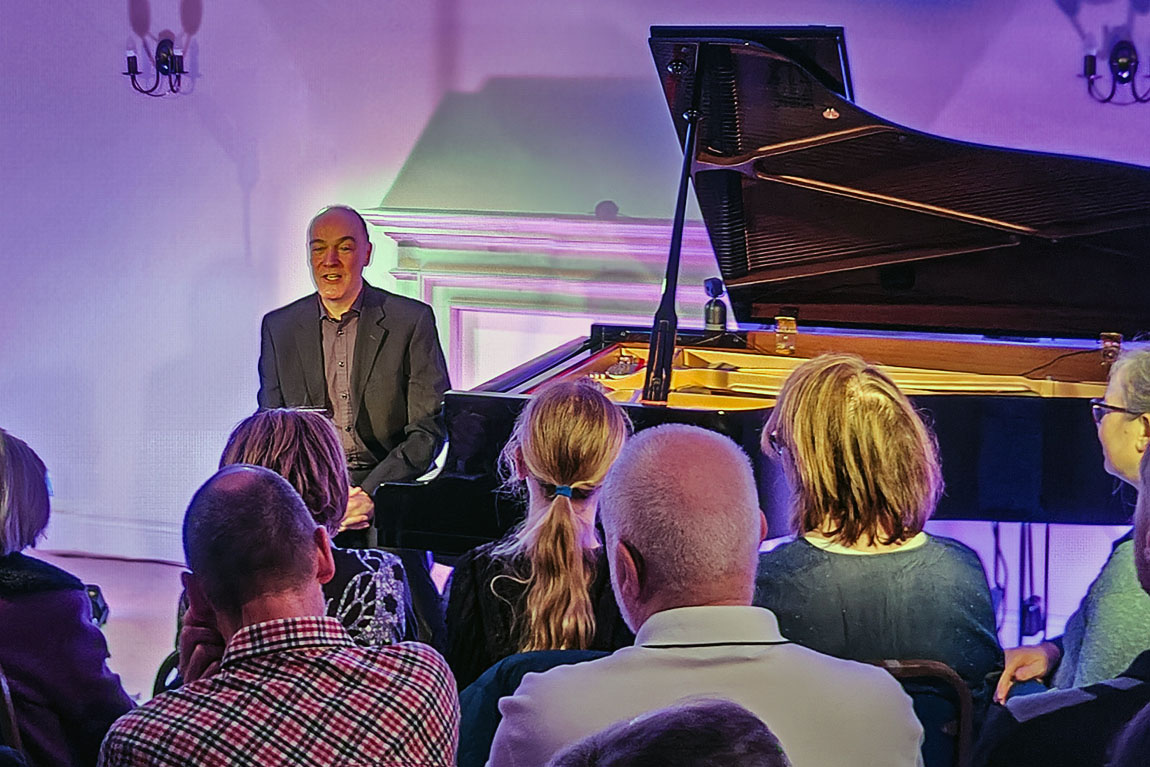
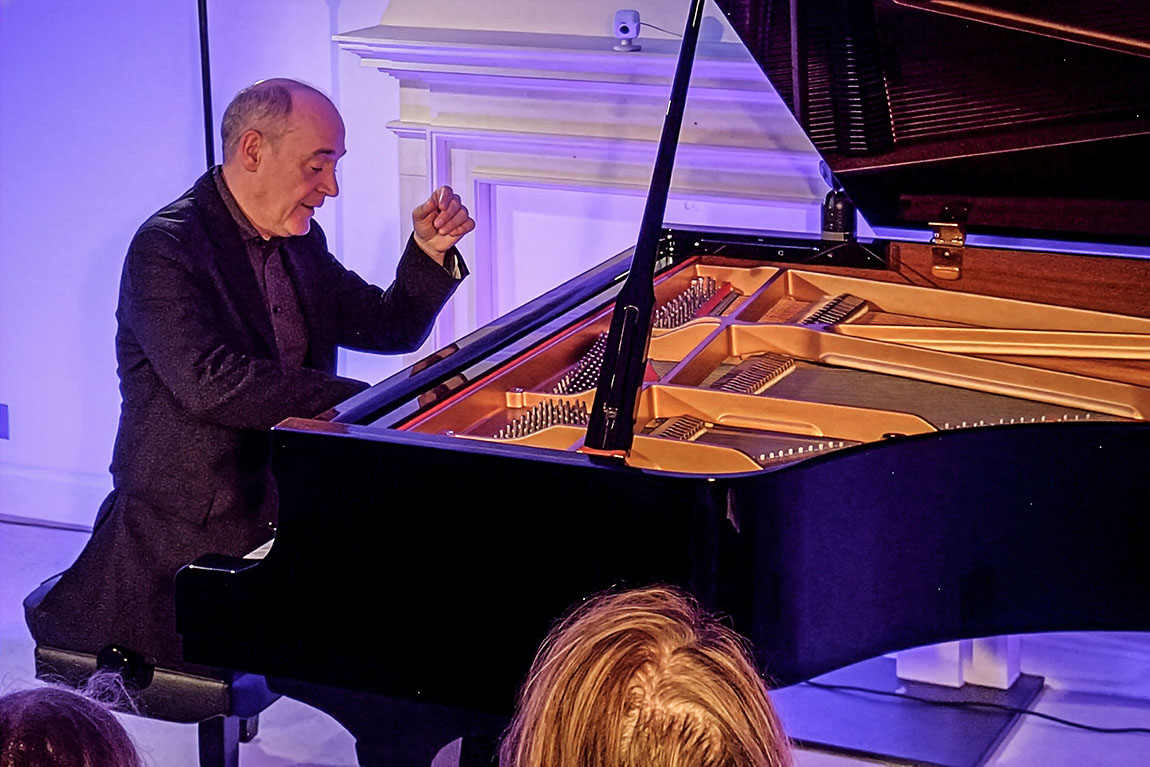
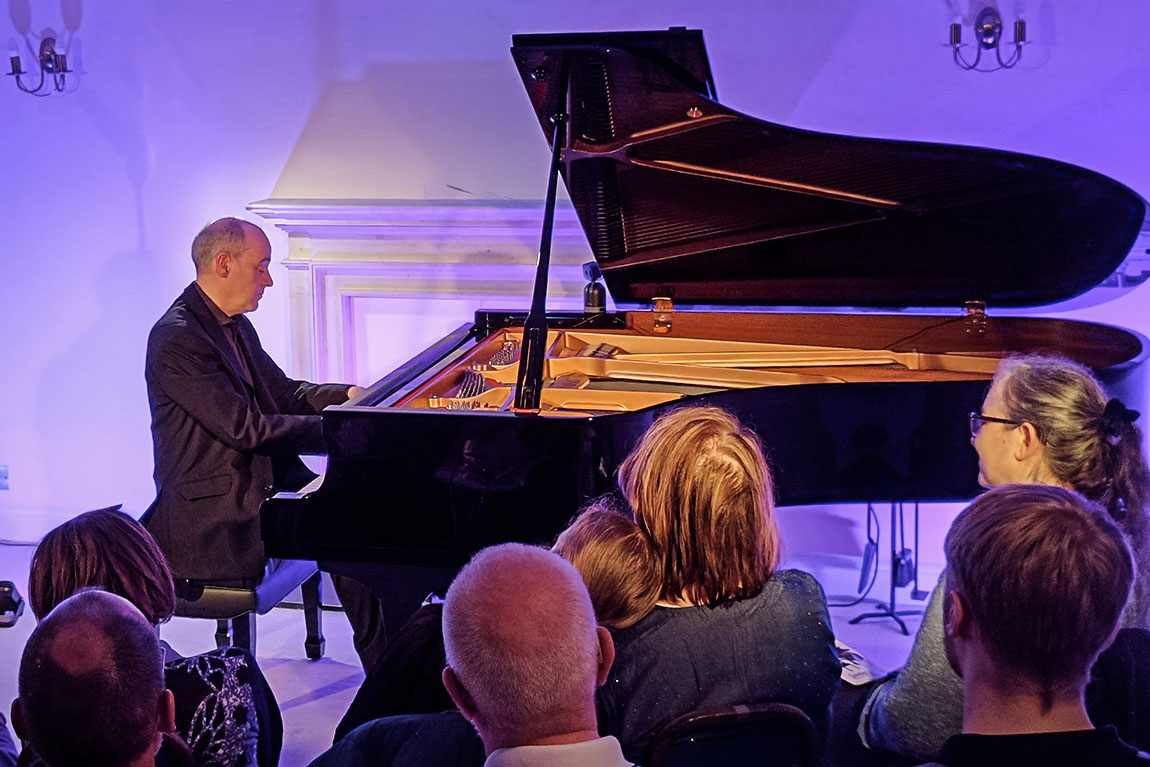
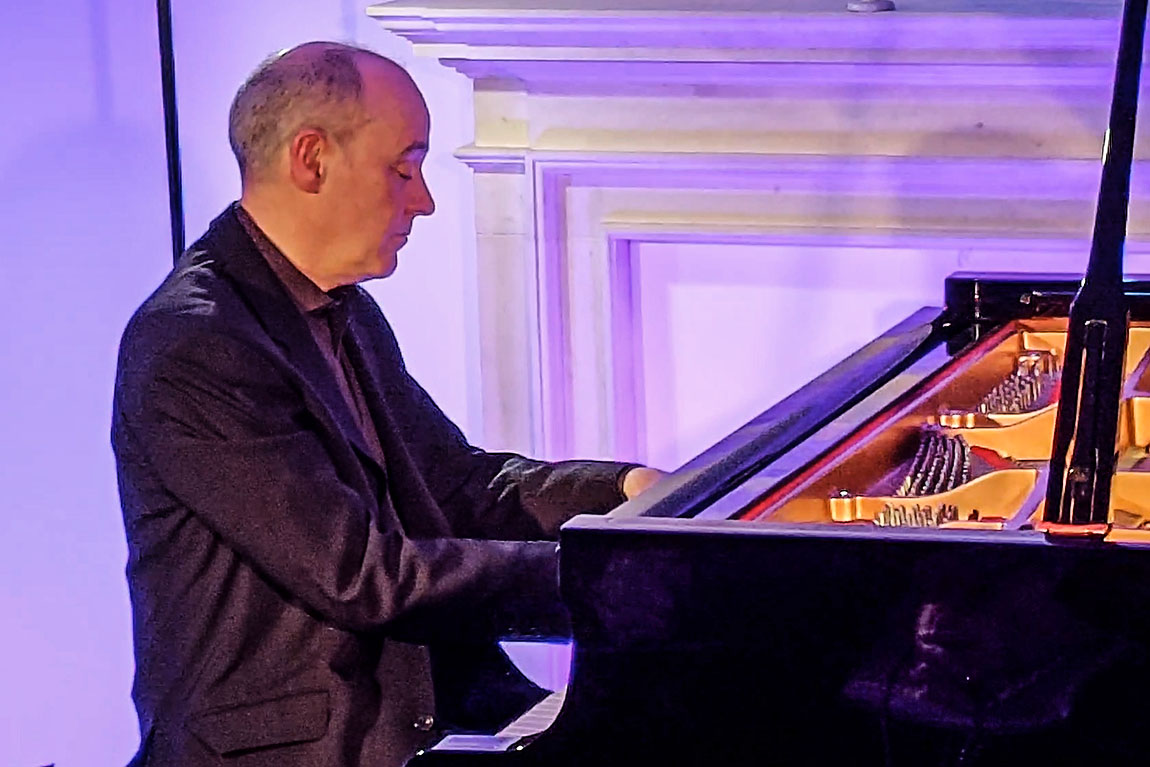
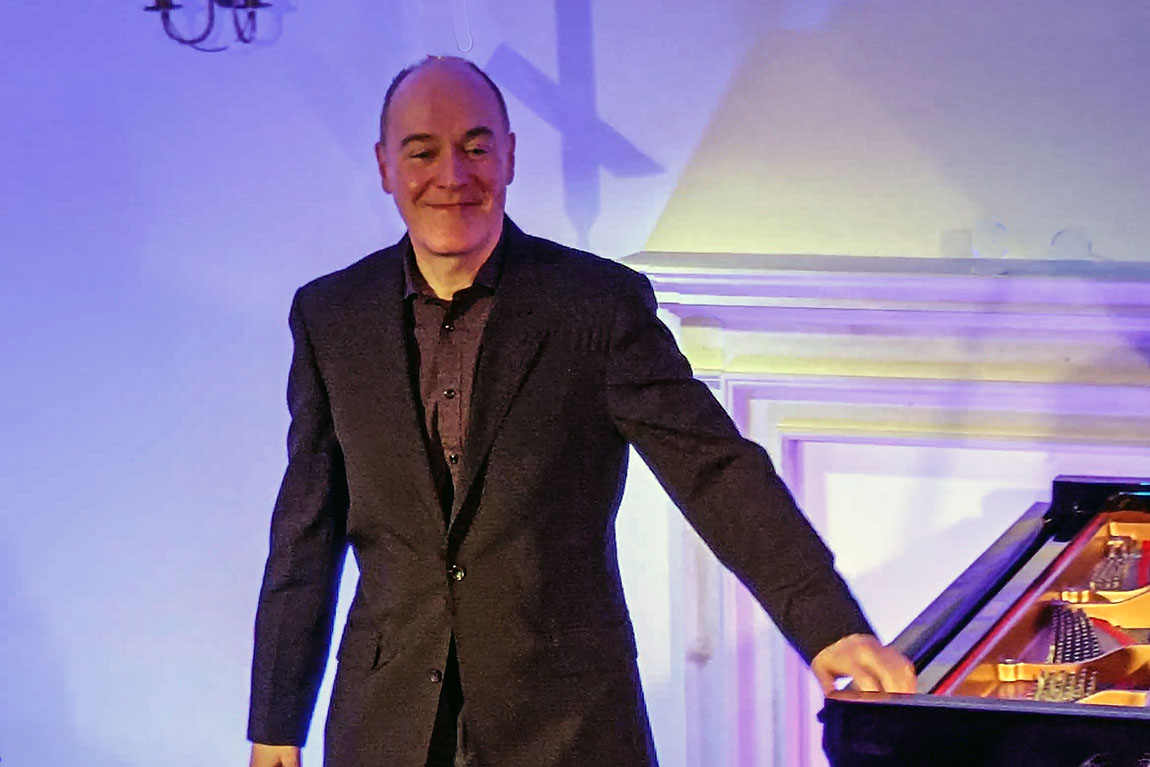
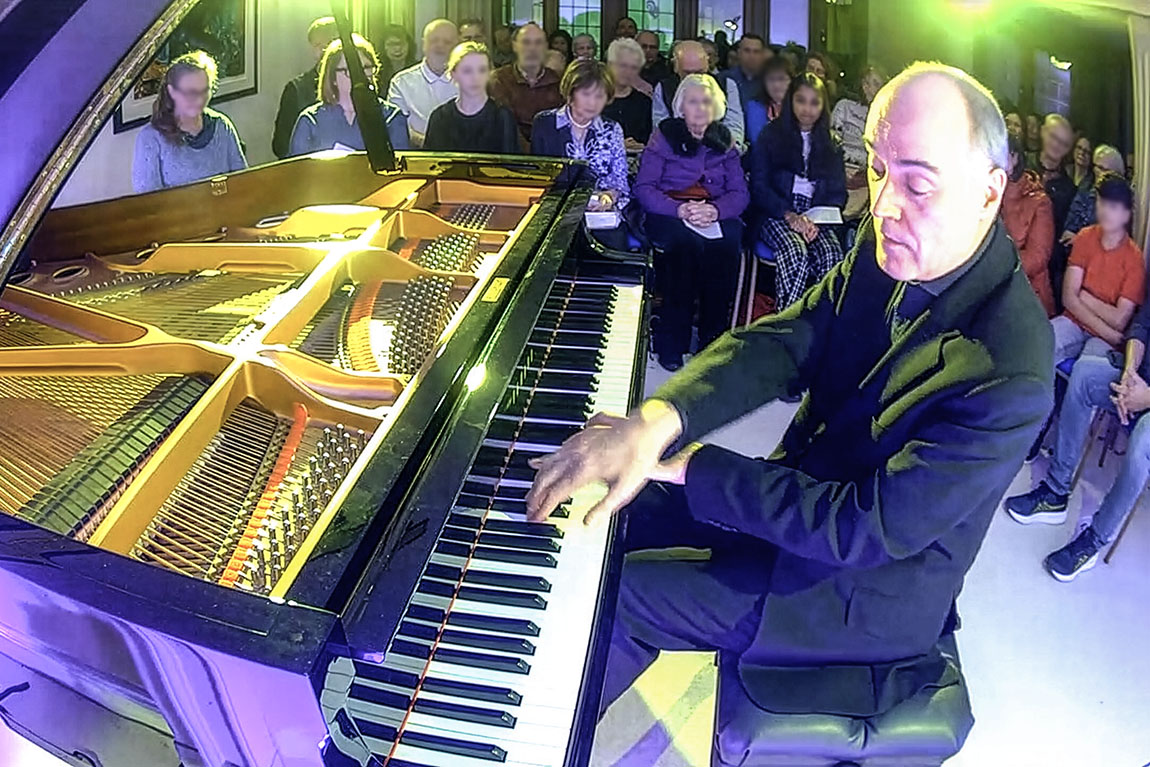
“Unfailingly communicative playing” is the first thing mentioned in Leon McCawley’s official biography. At Breinton, the distinguished British pianist proved this statement to be 100 percent correct! By now I have experienced hundreds, if not thousands, of concerts but rarely have I felt so comfortably cozied up with the music presented.
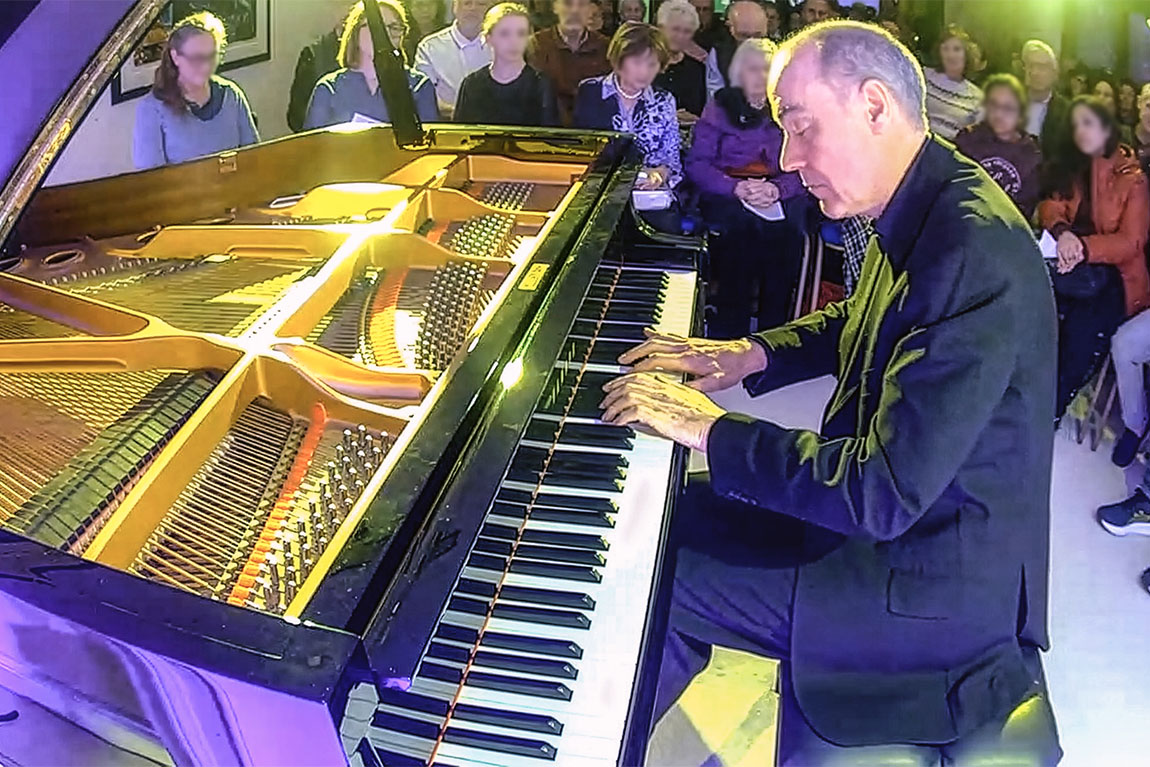
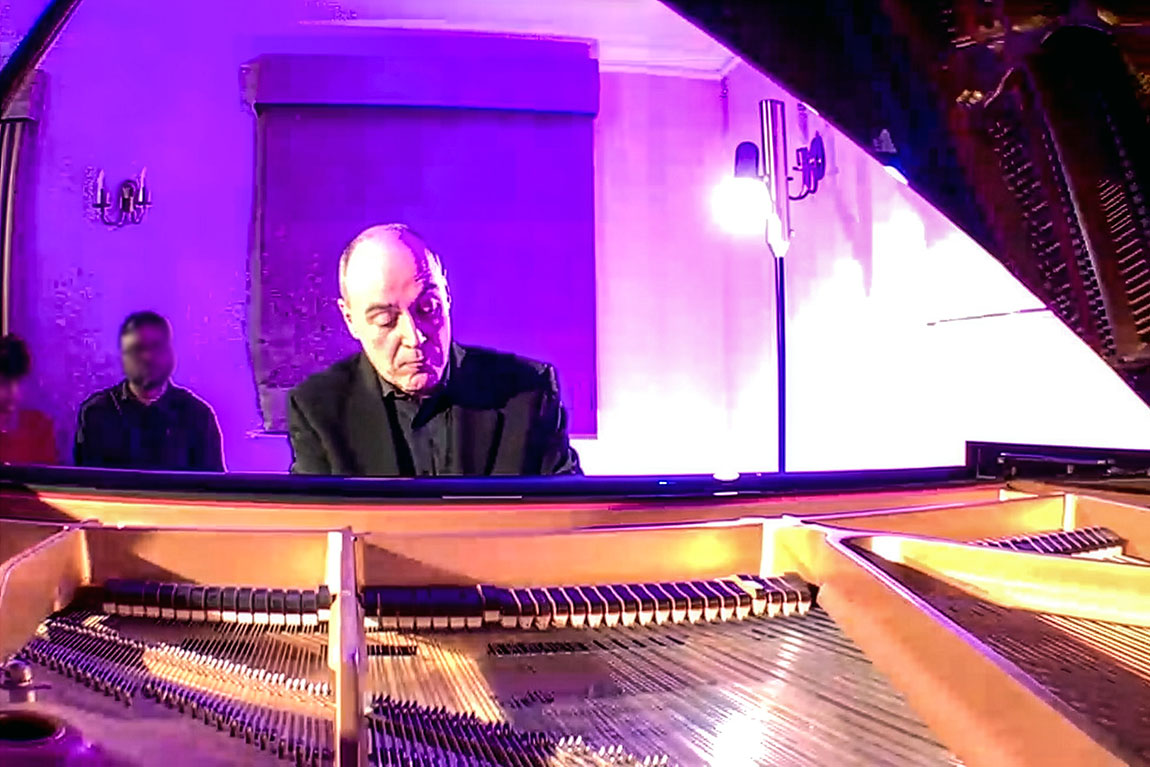
Leon’s performance felt close, personal, warm and approachable. Be it the light-hearted and charmful Haydn Sonata No. 59, the colourful harmony-chasing Scriabin Deux Morceaux, the dark and agitating first two movements of Prokofiev Sonata No. 4, and its bursting final movement of maximum intensity, the delightful Six Variations Op. 34 by Beethoven, the colourful sounds of cascading water by Liszt, the irresistibly lyrical Fauré Nocturne No.4, the rapidly flowing water movement by Ravel, and the most elegant and dance-like Ballade of Chopin, whether the repertoire required a light touch or intense virtuosity, his playing offered the audience a feeling of constantly being gently or passionately spoken to.
Leon’s programme encompassed over 125 years of music history; he took the audience through an amazing journey, so we embraced everything from Haydn to Prokofiev. I was particularly fascinated by the astonishingly diverse sound universe he introduced to us; every piece offered a different sound world, and his careful programming (Haydn-Scriabin-Prokofiev, Beethoven-Liszt-Faure-Ravel-Chopin) made the contrasts stand out. Leon’s ability to express countless tonalities was staggering, so was his acuteness of playing, which I value greatly. Leon is a pianist of integrity and possesses precious gifts of innate talent and earned intelligence.
While the audience was still absorbed in the afterglow of the final piece, Chopin Ballade No.3, Leon played the first encore, Tchaikovsky Valse Sentimentale. It was utterly beautiful and heart-squeezing. The second encore, Prokofiev Harp prelude, completed the evening in an uplifting mood.
Programme Notes
Haydn: Sonata No. 59
Written during Haydn’s long service to the Esterházy court, this sonata comes from the final period of his work for keyboard and reflects a composer writing with complete confidence and freedom. By this stage, Haydn was fully aware of the expressive possibilities of the piano, and he exploits contrasts of sound, register, and mood with great subtlety.
The opening movement is built from clear, well-defined ideas, yet it is full of small surprises. Phrases rarely unfold exactly as expected, and Haydn delights in gentle disruptions: a pause at an awkward moment, a sudden change of direction, or a turn of harmony that briefly unsettles the listener before restoring balance. The wit here is understated and depends more on timing and imagination than on obvious gestures.
The slow movement offers a more inward and reflective character. Its song-like melody unfolds with ease, and the decoration grows naturally out of the musical line rather than drawing attention to itself. There is a sense of calm poise throughout, with expression achieved through subtle shifts of colour and harmony rather than dramatic contrast. The mood is intimate and quietly expressive.
The final movement restores energy and lightness. It moves with a confident, dancing spirit, driven by rhythmic vitality and a sense of forward motion. Playful details and quick exchanges between ideas keep the music alert and engaging to the end. The work as a whole shows Haydn at his most assured, combining clarity, charm, and inventiveness in a way that feels both natural and deeply satisfying.
Scriabin: Deux Morceaux
Composed late in Scriabin’s career, these two brief pieces belong to a period in which harmony, colour, and atmosphere had become more important to him than traditional thematic development. The musical language is compressed and highly charged, with little separation between foreground and background material.
The first unfolds as a single, continuous gesture. Harmonic tension replaces melody as the primary driver, with chords dissolving into one another rather than progressing conventionally. The piano is treated as a source of resonance, and the performer must manage pedalling with great care to preserve clarity within the haze.
The second is more volatile, its gestures sharper and more impulsive. Rhythmic instability and sudden shifts of register create an unsettled surface, yet the music remains tightly controlled. These pieces ask for concentration rather than expansiveness, offering a moment of intense introspection early in the programme.
Prokofiev: Sonata No. 4
This sonata was begun during Prokofiev’s student years and completed more than a decade later, resulting in a work that looks both backward and forward. It is one of his most inward piano compositions, standing apart from the sharply driven, energetic style often associated with his music.
The opening movement unfolds slowly and deliberately. Musical ideas emerge in fragments rather than fully formed themes, and the harmony creates a sense of tension that is never fully released. Instead of driving ahead, the music seems to hesitate and circle around its material, establishing an atmosphere of unease and restraint.
The second movement offers contrast through a lighter surface and more flowing motion. Beneath this relative calm, however, there is a persistent feeling of instability. Unexpected accents and sudden changes of direction prevent the music from settling, and moments of lyricism are coloured by a subtle sense of irony.
The final movement brings a greater sense of momentum, drawing together elements heard earlier in the sonata. Rhythmic energy increases, but the underlying darkness remains. Rather than resolving the tension, the music presses forward with determination, closing in a mood that is tense and unresolved.
Beethoven: Six Variations
Beethoven’s approach to variation form was already radical by the time this work was written. Instead of treating the theme as a fixed object to be decorated, he reshapes it repeatedly, altering rhythm, texture, and character so that each variation presents a distinct idea.
The sequence is carefully planned. Contrasts are strong, but the overall direction is clear, with each variation contributing to a growing sense of confidence and scope. Moments of brilliance sit alongside more reflective passages, and the piano writing ranges widely in character.
The final variation expands the scale and brings the set to an affirmative close. What emerges is not simply a display of invention, but a tightly argued whole, pointing towards the more expansive variation cycles of Beethoven’s later years.
Liszt: Les Jeux d’eaux à la Villa d’Este
Inspired by the fountains of the Villa d’Este in Rome, this piece belongs to Liszt’s later years, when virtuosity had become a means rather than an end. While the writing is technically demanding, the focus is on colour, texture, and harmonic exploration.
Flowing figures suggest the movement of water, but the effect is never merely descriptive. Harmonic shifts and moments of stillness create a sense of contemplation, and the music often seems to pause and reflect as much as it flows.
The challenge lies in balancing clarity with richness of sound. When this balance is achieved, the result is luminous and expansive, with a sense of quiet wonder beneath the surface brilliance.
Fauré: Nocturne No. 4
This nocturne comes from a central period in Fauré’s output and combines lyrical warmth with increasing harmonic subtlety. The main melody unfolds smoothly, supported by an accompaniment that gently shifts the harmonic ground beneath it.
Expression is achieved through nuance rather than contrast. Small changes of harmony and rhythm shape the music’s direction, and the overall mood remains restrained and intimate. Rather than building to a dramatic climax, the piece maintains a sense of continuity and poise throughout.
Ravel: Jeux d’eau
Although it shares a watery title with Liszt’s work, Ravel’s approach is more precise and tightly controlled. Every note is carefully placed, and the brilliance of the surface writing is matched by a strong sense of structure.
Rapid figurations create a sense of constant motion, while harmonic changes add colour and sparkle. Beneath the shimmer lies a clear sense of balance, preventing the music from dissolving into pure effect.
Chopin: Ballade No. 3
This ballade occupies a lighter emotional world than its companions. The opening unfolds with ease and grace, suggesting a narrative that develops naturally rather than dramatically. Dance rhythms underpin much of the music, giving it buoyancy and forward motion.
Contrasting episodes introduce moments of tension, but these are absorbed back into the prevailing lyricism. Virtuosity is present throughout, yet it always serves the flow of the music rather than drawing attention to itself. The conclusion is expansive and affirmative, bringing the programme to a close with energy and elegance.
Leon's Biography
Praised for his unfailingly communicative playing, British pianist Leon McCawley has been delighting audiences worldwide since winning, in 1993, First Prize in the International Beethoven Piano Competition in Vienna and Second Prize at the Leeds International Piano Competition. His many concert performances and extensive discography have established him as a pianist of great integrity and variety, bringing freshness and vitality to Classical, Romantic and 20th century repertoire. McCawley’s 2024 release ‘Natural Connection’ for SOMM Recordings is no exception: “This scintillatingly varied recital combines sensuous virtuosity, compelling charm and musical probity. Highly recommended.” (Gramophone, February 2024).
An acclaimed exponent of Mozart, he has performed and recorded (Avie Records) the complete cycle of Mozart piano sonatas in winning interpretations: “There’s absolutely no vanity in his playing. In his hands the Mozartian oeuvre emerged with striking vividness” (International Piano). Notable recitals in past seasons include: Wigmore Hall (where he is a regular performer and was Artist-in-Residence in 21/22 season), four invitations to International Piano Series at London’s Southbank Centre, Hong Kong Arts Festival, Mexico City’s En Blanco y Negro Piano Festival, New York’s Lincoln Center, Singapore International Piano Festival and Piano Visions series at Academy of Fine Arts in Stockholm. He can be frequently heard on BBC Radio 3 both in performance and interview with recent broadcasts including In Tune, Wigmore Hall Lunchtime Series and Performance on 3.
As a concerto soloist, Leon has performed with many leading British orchestras including the BBC Concert, BBC Philharmonic, London Philharmonic, Royal Philharmonic, Royal Scottish National and Ulster Orchestras, Bournemouth and City of Birmingham Symphony Orchestras and Royal Northern Sinfonia. He has made several appearances at the BBC Proms which have been televised on BBC4. Further afield, McCawley has made concerto appearances with, amongst others, Cincinnati, Dallas, Fort Worth, KBS (Seoul), RTÉ National and St. Petersburg Symphony Orchestras, Malaysian and Netherlands Philharmonic Orchestras, Philadelphia Orchestra and Orquesta Sinfónica del Principado de Asturias and has worked with conductors such as Sir Mark Elder, Paavo Järvi, Domingo Hindoyan, Andrew Litton, Sakari Oramo, Sir Simon Rattle, Robin Ticciati and John Wilson.
Leon studied at Chetham’s School of Music, Manchester with Heather Slade-Lipkin before continuing his studies at the Curtis Institute of Music, Philadelphia with Eleanor Sokoloff. He also received invaluable guidance from Nina Milkina in London.
As a collaborative musician, he has performed at many prestigious concert venues including BBC Proms Chamber Series, BBC Radio 3 Lunchtime Series at Wigmore Hall and Aldeburgh, Brighton, Cheltenham, Edinburgh, Galway, Lofoten (Norway) and Westport international festivals. Recent chamber music partners have included the Simply Quartet, Michael Collins, Nicholas Daniel, José Franch-Ballester and recitals with baritone Roderick Williams.
Leon has appeared as juror and adjudicator of many competitions including at The International Edvard Grieg Piano Competition, BBC Young Musician, Royal Over-Seas League Competition, Feis Ceoil (Dublin) and Les Étoiles du Piano International Competition in Roubaix, France. He has given masterclasses all over the world, most recently at Amalfi Coast Music and Arts Festival in Italy, Festival Internacional de Piano de Málaga in Spain and Chetham’s International Piano Summer School in Manchester.
McCawley’s discography includes, on Avie Records, a double disc of Schumann Piano Music (Editor’s Choice in Gramophone); The Complete Piano Works of Hans Gál (also a Gramophone Editor’s Choice); and The Complete Mozart Piano Sonatas (awarded a Diapason d’Or); Beethoven’s Choral Fantasy with Royal Philharmonic Orchestra and City of London Choir/Hilary Davan Wetton (Naxos Records); Vaughan Williams Double Piano Concerto with John Lenehan and Royal Scottish National Orchestra/Martin Yates (awarded 5 stars by BBC Music Magazine) and Stanford’s Piano Concerto in B flat with Royal Northern Sinfonia/Martin Yates (Dutton Epoch); and eleven albums on SOMM Recordings that include Chopin Piano Music; Barber Piano Music (Critic’s Choice in Gramophone); Brahms Piano Music (Classic FM CD of the Week); Schumann Piano Music; Rachmaninov Complete Preludes; Haydn Sonatas and Variations (awarded a Diapason d’Or); Schubert Piano Music; three further volumes of Haydn Sonatas and a compilation album of nature-inspired piano works entitled ‘Natural Connection’. His next piano recital album for SOMM will be released in February 2026.
Leon McCawley has been professor of piano at London’s Royal College of Music since 2008. He is married to the painter Anna Paik.