Roderick Williams & Julius Drake
on 12 July 2025
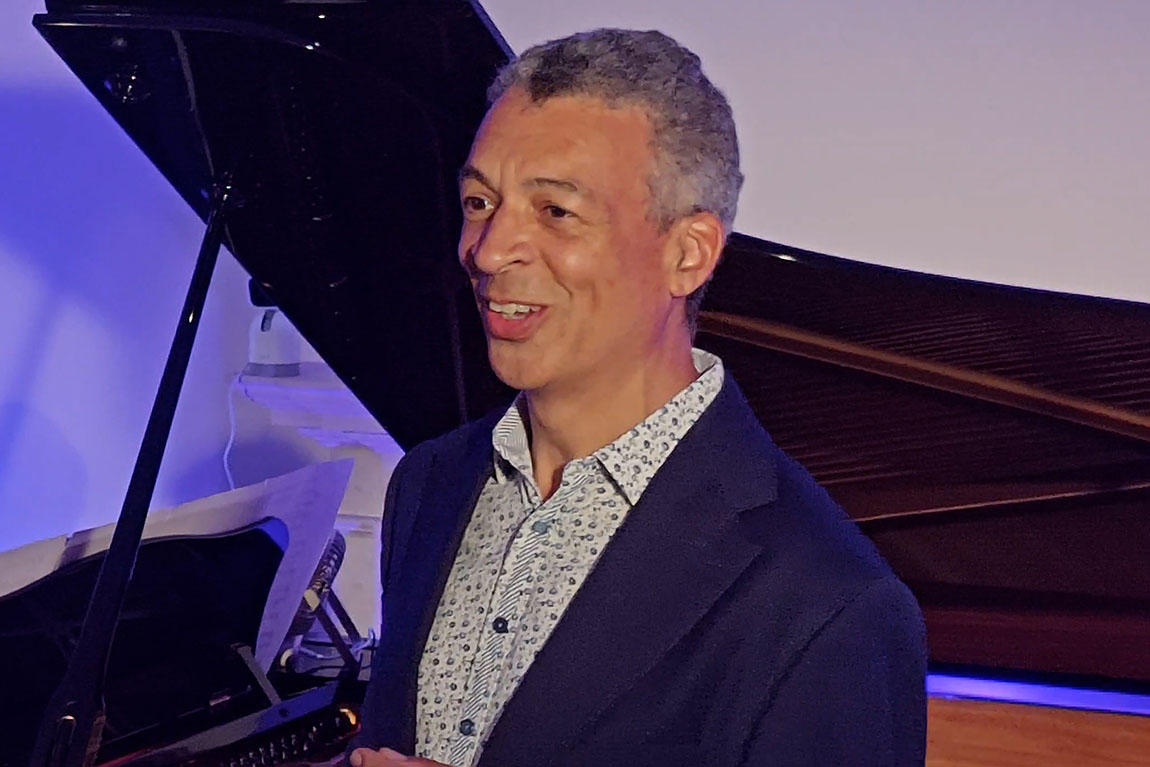

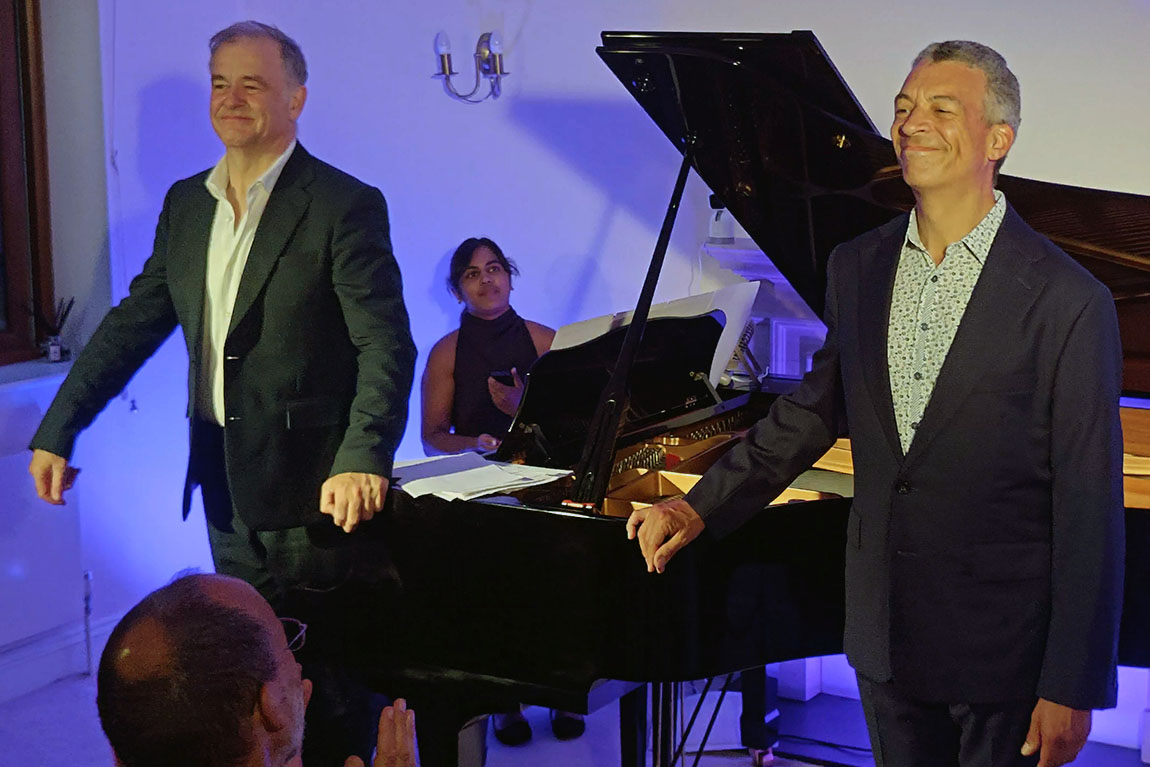
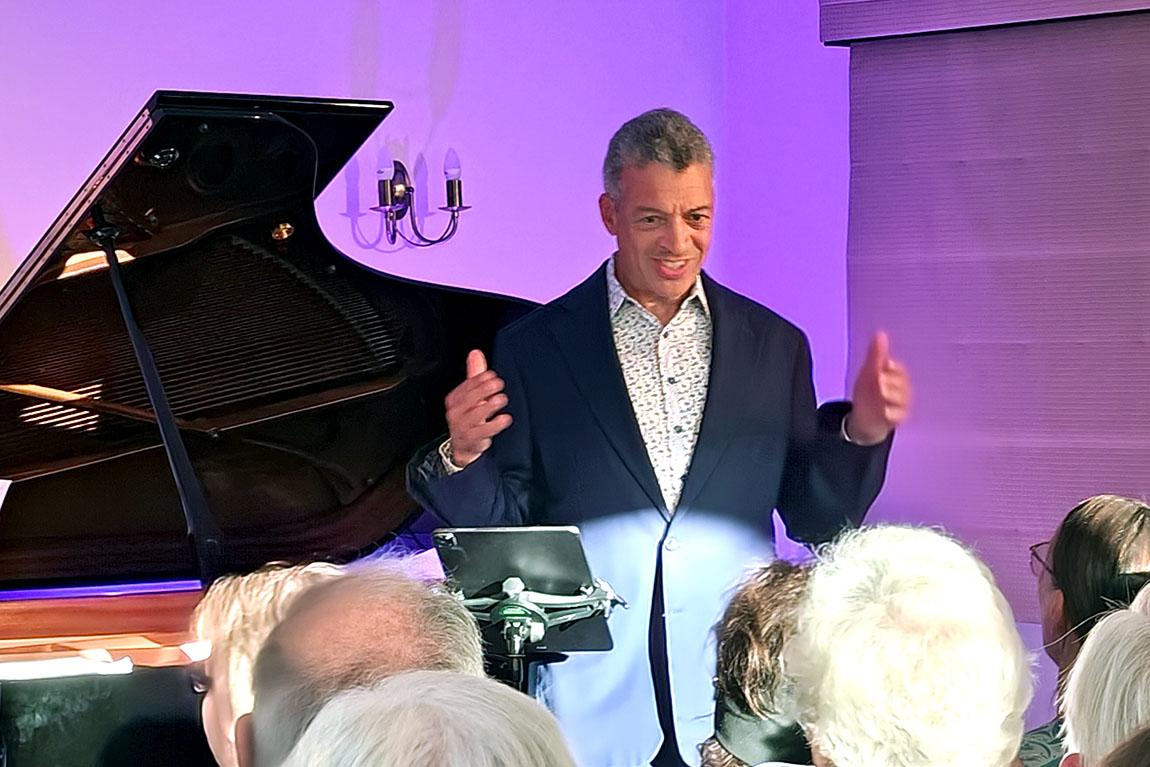
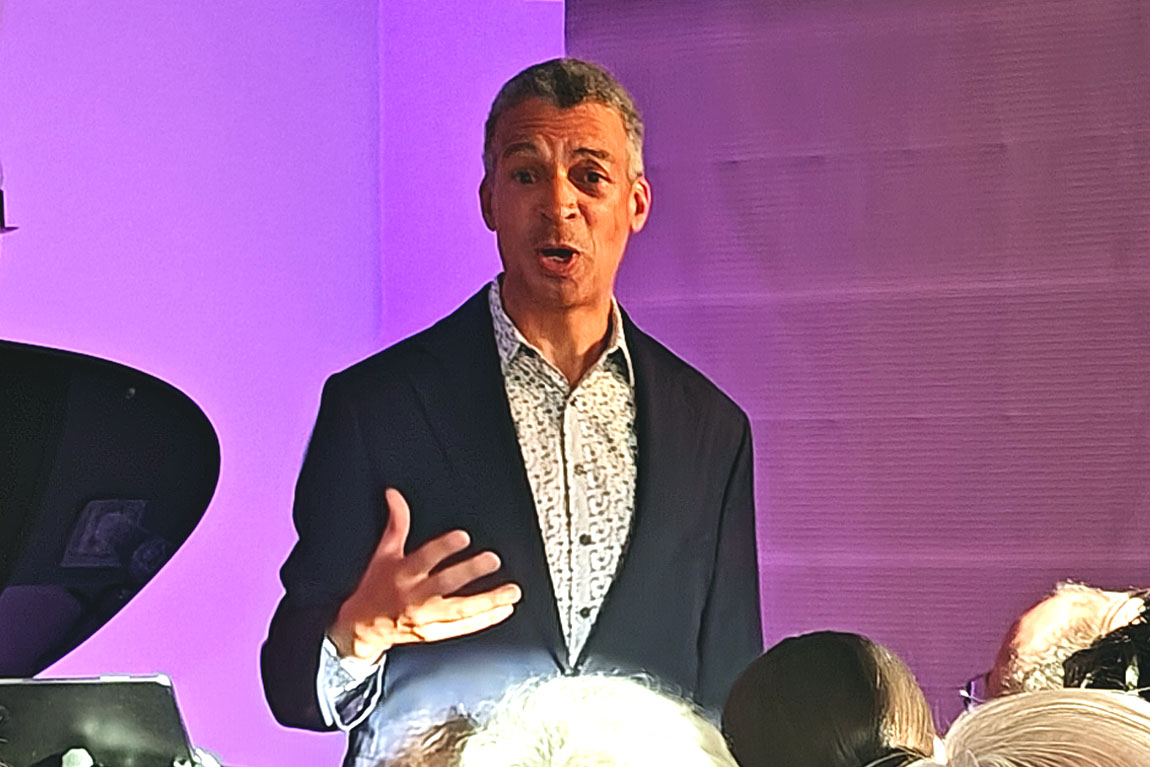
It is safe to say that you hardly come across someone as lovely as Roddy Williams. Naturally enthusiastic, warm, and eager, he literally brings sunshine wherever he goes. He makes you feel comfortable and welcomed, including people who have never met him before. His broad smile and charms instantly draw people in. And he is exactly like that on stage – a true performer in every sense and total giver.
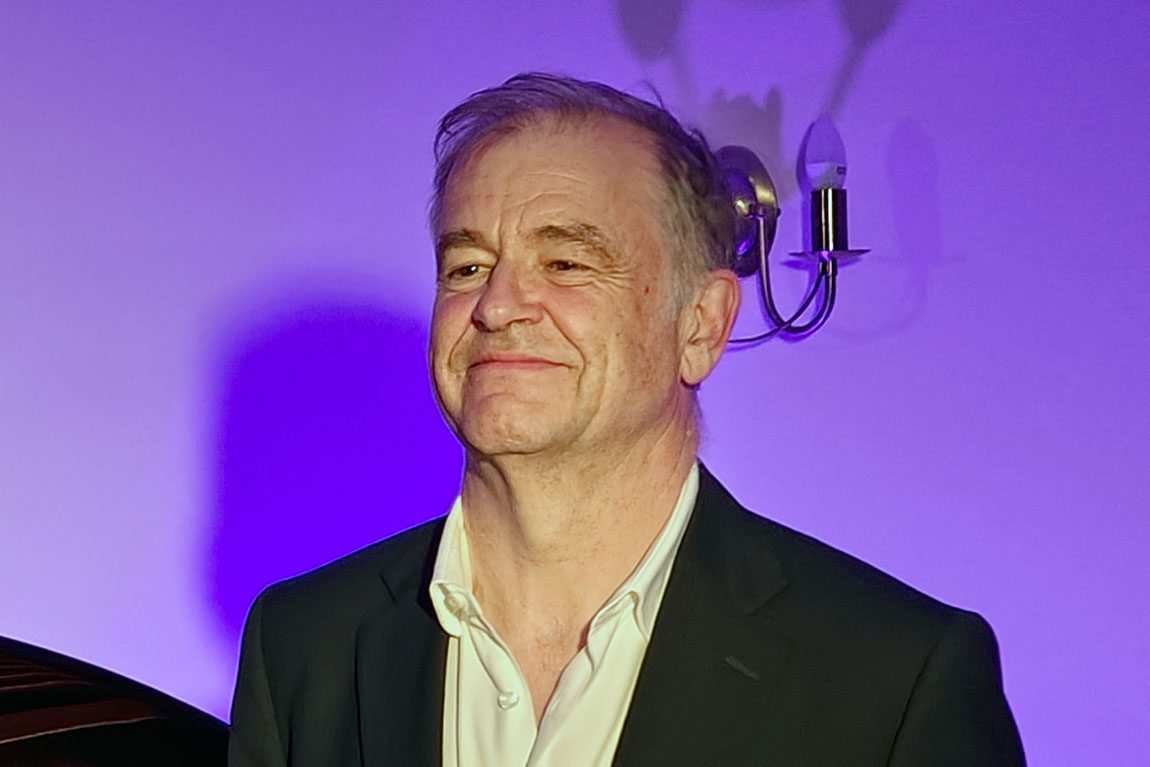
Joined forces with him was Julius Drake, a "collaborative pianist nonpareil". He arrived at Breinton looking totally casual and relaxed as if he was going for an afternoon swim, but what a powerful partnership they made. Their performance was every inch in agreement, which left no compromise.
Their programme of a captivating mix of Lieder by Felix and Fanny Mendelssohn and Franz List enchanted the audience with vast emotions, often through nature, whether gazing at blue mountains, wandering beneath trees, or feeling the heart’s restlessness with the wind. Roderick displayed his voice in many shapes and textures, sometimes like thunder which travelled as if there was no border, sometimes like a bird which reached the audience freely, and sometimes like a feathery caress. Julius’ pianism captured acutely every moment of the ride; he is bold, does not hold anything back, yet can be as subtle as a whisper - as only the most insightful interpreter can do.
It was a beautiful summer soirée in every aspect. Brilliant music, excellent performers, appreciative audiences and incredible weather – it bonded music and people together and reminded us of the true nature of Soirées at Breinton, and why we continue.
Beethoven – An die ferne Geliebte (To the Distant Beloved)
Poems by Alois Jeitteles
Beethoven’s only song cycle, An die ferne Geliebte, might not be as familiar as Schubert’s Winterreise, but it’s every bit as sincere in its expression of yearning. The six poems tell the story of a man who sits alone on a hillside, gazing across the landscape, imagining that the wind, clouds and birds might carry his thoughts to his beloved far away.
This is less a story and more a state of mind – the cycle lives in the space between memory and hope. In the first song, Auf dem Hügel sitz ich spähend, the poet is literally looking out from a hilltop, searching for a connection across the great divide. Nature is a constant presence: blue mountains, sailing clouds, the return of spring. But it’s also a reminder of absence.
By the end, in Nimm sie hin denn, diese Lieder, there’s a kind of gentle resignation. The speaker cannot reach the beloved in person – but he can send his songs. The music and poetry fuse in a quiet act of devotion: if he can’t be there, maybe the music can. It’s an early example of how the Lied would become a medium for unspoken emotional truths.
Hensel – Four Songs
Poets: Heinrich Heine, Johann Heinrich Voß
Fanny Hensel (née Mendelssohn) brings us a group of songs rich in introspection and natural imagery. There’s a quiet melancholy running through this set, beginning with Verlust (“Loss”) by Heine. The poem is only a few lines long, but it captures that sudden, aching void when something – or someone – is gone. There’s no narrative, just the feeling of absence settling in.
Sehnsucht (“Longing”) turns its gaze outward, expressing a desire that’s both hopeful and restless. The poet imagines flying off on the wind or sailing across the waves to find the object of their longing. It’s a fantasy of escape, of love as something that pulls us forward into the unknown.
In Das Meer erglänzte weit hinaus (“The Sea Shimmered Far Out”), we return to Heine’s world, where the vastness of the sea becomes a mirror for inner emotion. The poem is filled with light and motion – glittering waves, a breeze on the sails – but the final line delivers a twist: the speaker is still alone. The sea, like the heart, is full of promise and mystery, but no answers.
The set closes with Ich wandelte unter den Bäumen (“I Walked Beneath the Trees”), another Heine gem. Here, walking through nature brings no peace; instead, a bird seems to mock the speaker’s sadness, calling out the name of the beloved who has caused this pain. It’s deceptively simple – just a walk in the woods – but the emotional undercurrent is sharp and real.
Mendelssohn – Six Songs
Poets: Johann Droysen, Carl Klingemann, Johann Heinrich Voß, Ludwig Uhland
Felix Mendelssohn’s songs often have a certain lightness and grace, but that doesn’t mean they lack emotional weight. These six songs cover a range of moods and themes, from quiet yearning to the passage of time.
Geständnis (“Confession”) is brief but intense: someone finally dares to speak the truth of their love. There’s vulnerability here – the tremble of admitting something deeply felt – and a sense that this moment has taken a long time to reach.
Wartend (“Waiting”) is all about patience and anticipation. The speaker watches the hours go by, hoping for a sign, a message, a knock at the door. It’s an emotionally suspended moment: we don’t know if what they’re waiting for will ever come, but we feel the weight of time pressing in.
Ferne (“Distance”) is a classic meditation on separation. The poet speaks of a beloved who is far away, and the ache that comes with that distance. There’s no anger or complaint – just the quiet endurance of someone who misses another deeply.
Im Herbst (“In Autumn”) shifts the mood. The changing seasons become a metaphor for fading love, or perhaps the passing of youth. The falling leaves, the shorter days – they’re all reminders that nothing lasts forever.
Scheidend (“Departing”) is simple and gentle: a farewell. There’s no drama, just the soft sadness of parting, whether for a day, a season, or a lifetime. It’s the kind of goodbye we’ve all experienced where the world keeps turning even as something precious slips away.
The final song, Frühlingsglaube (“Faith in Spring”), brings a touch of hope. Spring is coming, the winds are softer, and the heart dares to believe in renewal. It’s a beautifully balanced way to end the set: after all the waiting and longing, the seasons promise that new beginnings are possible.
Liszt – Four Songs
Poets: Ferdinand von Saar, Carl Coronini, Johann Wolfgang von Goethe, Ludwig Rellstab
Liszt may be known for his piano fireworks, but in these songs we get a more intimate side of his artistry. The emotions are intense, but the mood is often reflective rather than flamboyant.Des Tages laute Stimmen (“The Day’s Loud Voices”) is a poem about silence and solitude. As evening falls, the noisy world fades away, and the speaker is left alone with thoughts of someone dear. It’s not a sad song, exactly – more like a deep exhale after a long day. The night becomes a space for memory and presence, even in absence.
Die Fischertochter (“The Fisherman’s Daughter”) tells a miniature story. A young fisherman has fallen for the fisherman’s daughter, but we sense that this love is impossible or at least unfulfilled. There’s a tension between the beauty of the natural setting – lakes, reeds, shimmering water – and the emotional undertow of longing and regret. It’s a love that can’t quite be reeled in.
Der du von dem Himmel bist (“You Who Are from Heaven”) uses Goethe’s famous poem, addressed to Peace itself. The speaker begs this heavenly figure to soothe the turmoil of life – to still the storms of the heart. It’s a prayer in the form of a Lied, and Liszt’s setting heightens the contrast between inner chaos and the desired calm.
Finally, Es rauschen der Winde (“The Winds Are Rustling”) returns to the theme of nature reflecting emotion. The poem paints a scene of wind and trees, but the real subject is the heart’s restlessness. The rustling wind becomes a metaphor for anxiety or unresolved feeling – the way thoughts can spiral when we’re alone with them.
Clara Schumann – Liebst du um Schönheit (If you Love for Beauty)
Poem by Friedrich Rückert
This short, exquisite song is Clara Schumann at her most direct. Rückert’s poem is a quiet declaration: if you love someone for beauty, youth, or treasure – then don’t love me. But if you love for love’s sake, then love me forever.
There’s no drama, no embellishment – just the clear voice of someone who knows the difference between fleeting charm and lasting devotion. Clara’s music mirrors that clarity: tender, poised, and deeply honest. In under two minutes, she gives us a complete emotional world – one that still resonates with anyone who’s ever questioned what love really means.
Mahler – Ich bin der Welt abhanden gekommen (I Am Lost to the World)
Poem by Friedrich Rückert
We end with a masterpiece of quiet withdrawal. In this song, the speaker declares that they have left the world behind – not in death, but in spirit. They live now in a space of peace and music, far from noise, conflict, and demand.
It’s not a sad song, though it often moves listeners to tears. Mahler’s setting is full of stillness and slow beauty. The words express what many of us might feel but rarely say aloud: the wish to disappear into something deeper, truer, and more meaningful than the surface of everyday life.
This is a song about retreat, but it’s also about survival – about finding sanctuary in art and silence. As a closing moment to this programme, it’s unforgettable: a final breath, and then release.
The pianist Julius Drake lives in London and enjoys an international reputation as one of the finest instrumentalists in his field, collaborating with many of the world’s leading artists, both in recital and on disc. His passionate interest in song has led to invitations to devise song series for Wigmore Hall, London; The Concertgebouw, Amsterdam; 92nd Street Y, New York; and the Pierre Boulez Saal, Berlin. He curates an annual series of song recitals – Julius Drake and Friends – in the historic Middle Temple Hall in London. Julius Drake is Professor of Collaborative Piano at the Guildhall School of Music in London and he is regularly invited to give masterclasses worldwide.
Julius Drake’s many recordings include a widely acclaimed series with Gerald Finley for Hyperion Records of which ‘Songs by Samuel Barber’, ‘Schumann: Dichterliebe & other Heine Settings’ and ‘Britten: Songs & Proverbs of William Blake’ won the 2007, 2009 and 2011 Gramophone Awards; recordings with Ian Bostridge and Alice Coote for EMI; with Joyce DiDonato, Lorraine Hunt Lieberson and Matthew Polenzani for Wigmore Live; and with Anna Prohaska for Alpha. Julius Drake’s recording of Janáček’s ‘The Diary of One Who Disappeared’, with tenor Nicky Spence and mezzo-soprano Václava Housková for Hyperion Records, won both the Gramophone and the BBC Music Magazine Awards in 2020.
Concerts this season include recitals at La Scala, Milan and the Teatro de la Zarzuela, Madrid with Ludovic Tézier; return visits to the Boulez Saal Berlin for the series ‘Lied und Lyrik’; a recital tour in the USA with Ian Bostridge; the complete Mahler songs in five recitals in the Mahler Festival at the Concertgebouw, Amsterdam; recitals at the Opera Liceu in Barcelona with Gerald Finley, Sarah Connolly and Irene Theorin; return visits to the Chamber Music Festivals of Santa Fe, West Cork and Oxford; concerts in Berlin and at the Aldeburgh Festival with Andrè Schuen; piano duet recitals with Elisabeth Leonskaja in Austria, including at the Schubertiade Festival; recitals in the USA and Europe with Fleur Barron, Mercedes Gancedo, Christopher Prégardien, Julia Kleiter Anna Prohaska and Roderick Williams,; and at Wigmore Hall, London the Season Opening concert celebrating the Fauré Anniversary, as well as recitals with Alice Coote, Stuart Jackson, Sofia Fomina and Brindley Sherratt.
Roderick Williams is one of the most sought after baritones of his generation. He performs a wide repertoire from baroque to contemporary music, in the opera house, on the concert platform and is in demand as a recitalist worldwide.
He enjoys relationships with all the major UK opera houses and has sung opera world premieres by David Sawer, Sally Beamish, Michael van der Aa, Robert Saxton and Alexander Knaifel.
Recent and future engagements include The Traveller / Death in Venice for Welsh National Opera, the title role in Eugene Onegin and Yeletsky / Pique Dame for Garsington, Papageno for Covent Garden, Sharpless / Madame Butterfly for ENO and van de Aa’s Upload with Cologne Opera, Bregenz Festival and the Dutch National Opera.
Roderick sings regularly with all the BBC orchestras and all the major UK orchestras, as well as the Berlin, London and New York Philharmonic Orchestras, Deutsches Symphonie-Orchester Berlin, Orchestre Philharmonique de Radio France, Ensemble Orchestral de Paris, Accademia Nazionale di Santa Cecilia in Rome, Cincinnati Symphony, London Symphony and Bach Collegium Japan amongst others. His many festival appearances include the BBC Proms (including the Last Night in 2014), Edinburgh, Cheltenham, Bath, Aldeburgh and Melbourne Festivals.
Roderick Williams has an extensive discography. He is a composer and has had works premiered at the Wigmore and Barbican Halls, the Purcell Room and live on national radio. In December 2016 he won the prize for best choral composition at the British Composer Awards. From 2022/23 season he takes the position of Composer in Association of the BBC Singers
He performed the three Schubert song cycles around the UK culminating in performances at the Wigmore Hall and has subsequently recorded them for Chandos. Future releases include more Schubert, Schumann in English as well as works by Vaughan Williams.
He was Artistic Director of Leeds Lieder in April 2016, is Artist in Residence for the Royal Liverpool Philharmonic Orchestra from 2020/21 for two seasons and won the RPS Singer of the Year award in May 2016. He was awarded an OBE in June 2017 and sang at the Coronation Service of King Charles III in May 2023 as well as composed a choral work for the event.