
Kumi's Review
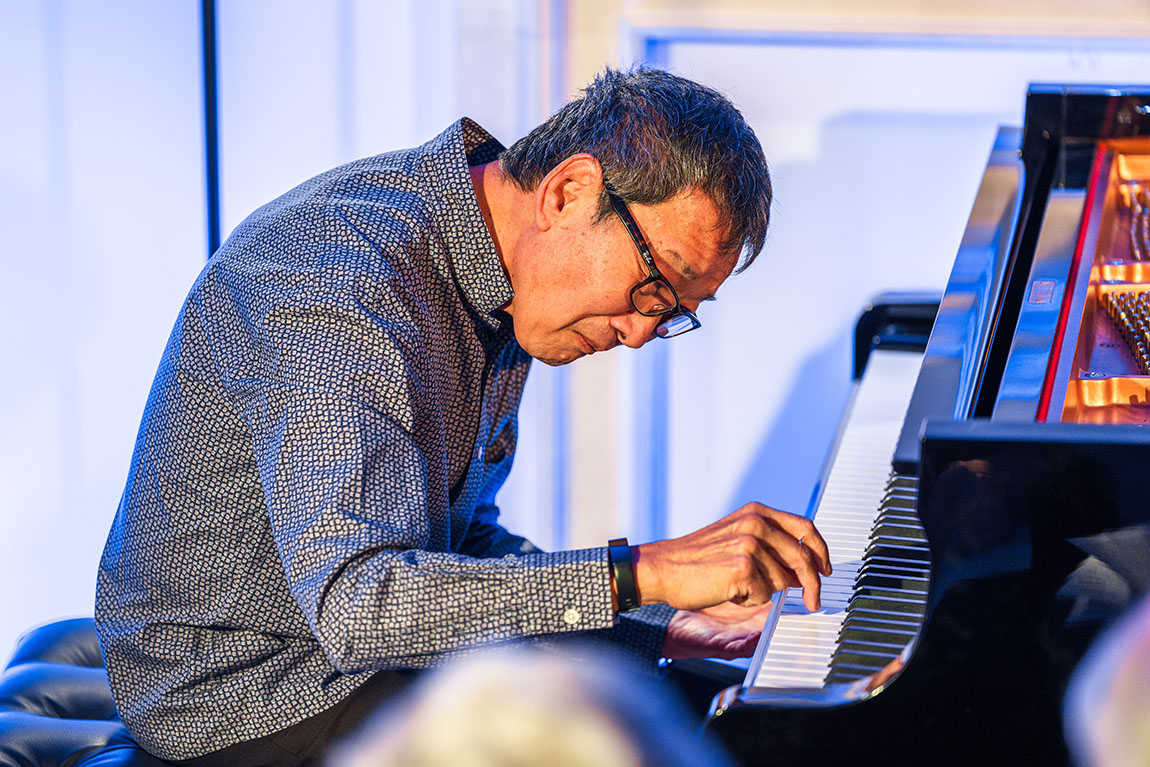
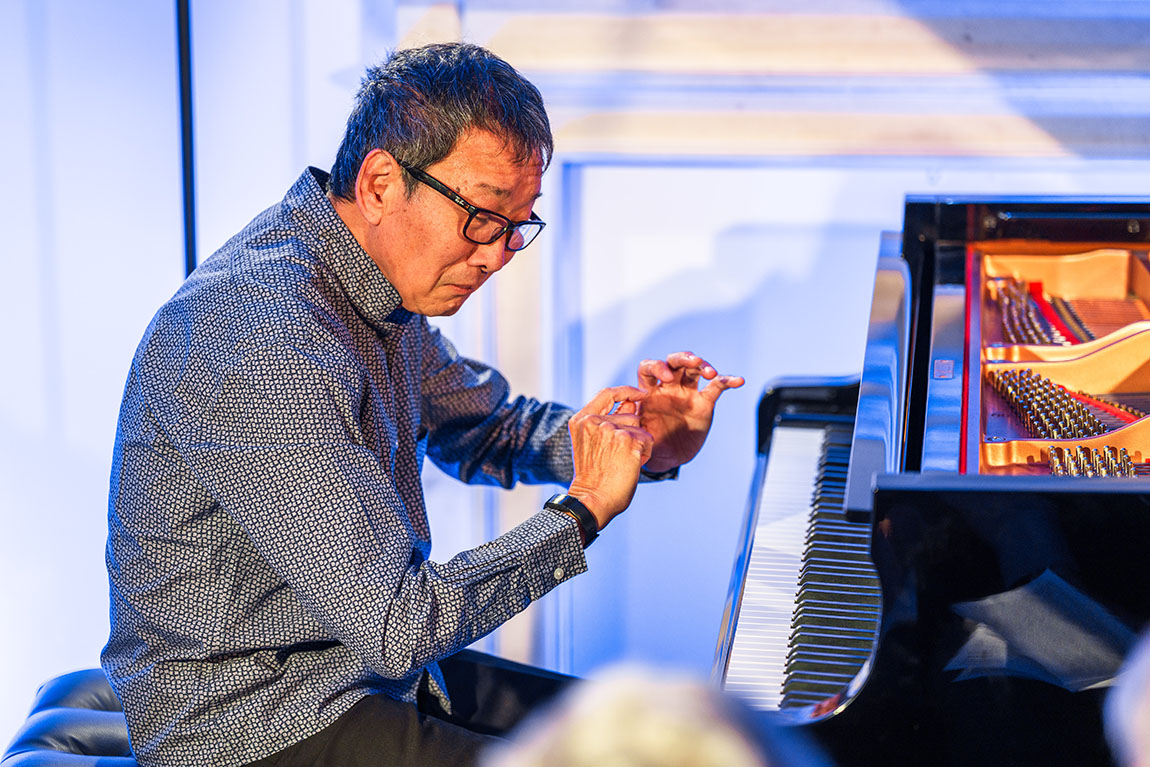
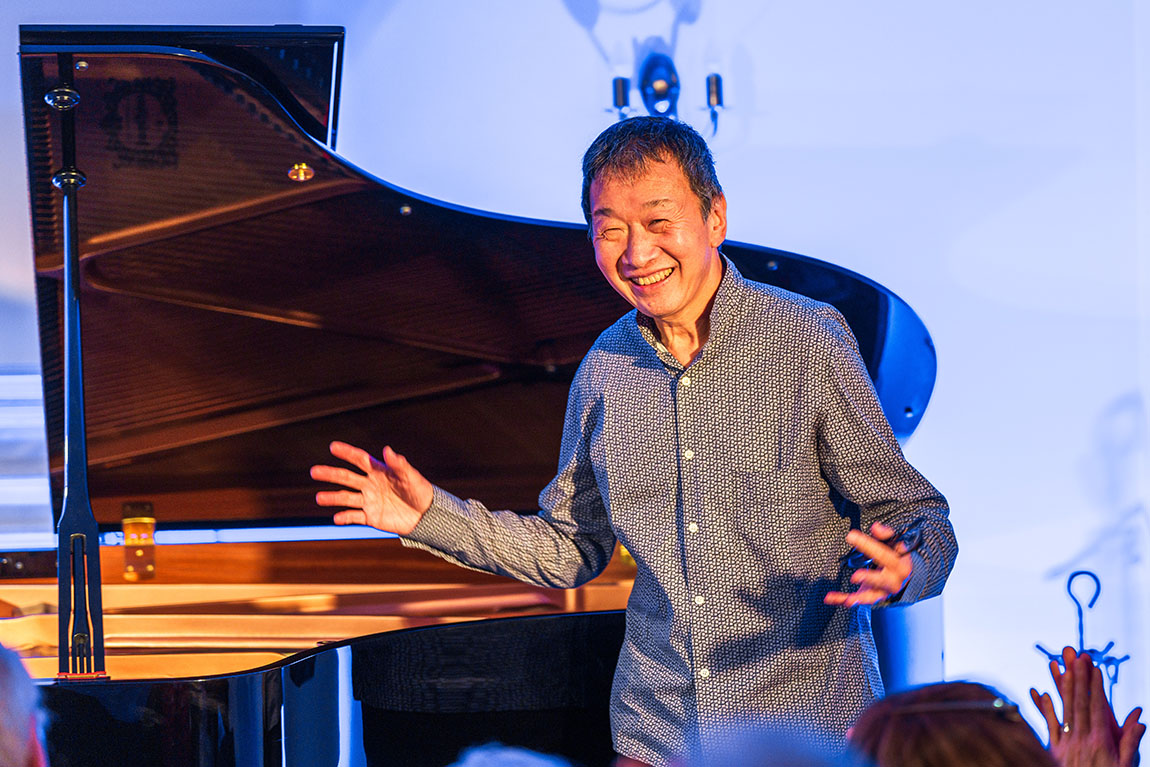
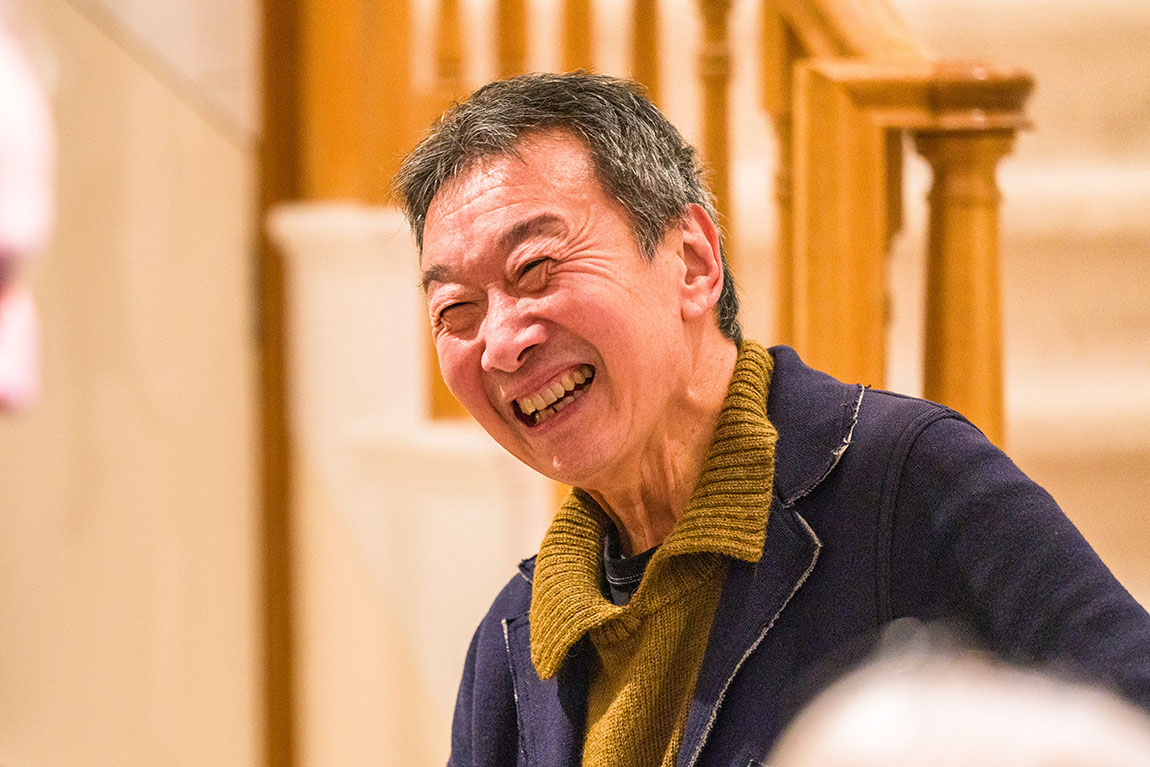
What a magnificent year Breinton has had! I think it is safe to say that our 2025 series has been exceptional. And Melvyn’s solo appearance last Saturday could not be better as a finale to our triumphant season.
His programme was asimple yet glorious combination of just two composers. The first half was Preludes Book 2 by Claude Debussy: atmospheric, scenic, fragrant, climatic, each prelude changed its figure and shape as Melvyn manipulated amazing colours and textures skillfully.
After the interval, Melvyn’s rendition of Schubert’s last sonata was truly beautiful. He started with a tempo perhaps slightly faster than what I’ve been accustomed to (too much Youtube listening - I wonder if anyone else felt as I did?). But he would not let melancholy dominate the music; he created more hope than despair, more light than darkness, and that was astonishingly ground-shaking for me. Such humanity, warmth, and life. At a glance, Melvyn seemed to be playing it matter-of-factly, but the truth was the opposite. His steady tempo, continuous glow, polished tones and incredible way to sing the melodies with the accompanying left hand ever gently supporting – they must have been all meticulously created by his craftmanship. There are things which virtuosity alone cannot create, and Melvyn provided plenty of it.
The very last piece of 2025, his encore, was Debussy’s Jardins sous la pluie. Perhaps I will find the endless rain which is making our garden soggy beautiful from now on…?
Programme Notes
Debussy: Préludes, Book II
Debussy completed his second book of twelve preludes in 1913, three years after the first set. Together they mark one of the high points of his piano writing. While he avoids giving the listener explicit instructions or narratives, the titles placed at the end of each prelude hint at impressions, scenes or characters that shape the music. The result is a collection that encourages the imagination without prescribing its direction, and that celebrates the piano as a vehicle for colour rather than for traditional virtuosity alone.
The opening prelude, Brouillards, meaning mists, begins with blurred harmonic outlines that drift in and out of focus. Debussy creates a feeling of gentle instability, as if the ground under the music is constantly shifting. The effect is not one of confusion but of quiet fascination, as the listener is drawn into a sound world shaped by subtle contrasts of light and shade.
Other preludes offer more sharply defined images. Feuilles mortes, or dead leaves, moves between wistful reflection and more forceful gestures, perhaps suggesting the unpredictable motion of windblown leaves. La Puerta del Vino, inspired by a postcard of the Alhambra, brings the habanera rhythm into Debussy’s language. Its dark harmonies and compressed energy create a sense of tension that never quite resolves, a reminder of the composer’s interest in musical cultures beyond France.
Les Fées sont d’exquises danseuses, or The fairies are exquisite dancers, is light and delicate, built from quicksilver textures that give the impression of weightless movement. In contrast, Bruyères evokes a pastoral calm. Its plain melody and gentle accompaniment recall older folk traditions, but filtered through Debussy’s refined harmonic palette.
General Lavine, eccentric, pays affectionate tribute to the popular entertainer Edward Lavine. Its jaunty rhythms and lopsided phrasing create a humorous portrait that edges towards caricature without slipping into parody. With La Terrasse des audiences du clair de lune, Debussy returns to a more contemplative style. This prelude is among the most atmospheric of the set, its quiet chords and graceful melodic fragments suggesting a ceremonial scene observed from a distance.
Ondine revisits the long standing musical fascination with water spirits, though Debussy avoids literal depiction. Instead he offers flowing patterns and shimmering sonorities that give a sense of enchantment rather than drama. Hommage à S. Pickwick honours Dickens’s creation Samuel Pickwick with warm humour. The prelude moves between mock pomposity and genuine affection, capturing the blend of dignity and absurdity in Pickwick’s character.
Canope follows with an atmosphere of stillness and ritual, its title referring to ancient Egyptian funerary urns. Here the writing is pared back to the essentials, and the muted dynamic markings contribute to an impression of hushed reverence. Les Tierces alternées breaks the spell with its athletic figuration built from alternating thirds, calling for agility and brilliance. It is a virtuoso prelude that seems almost to prepare the ground for the final and most expansive piece.
Feux d’Artifice brings the book to a dazzling close. As its title suggests, this is Debussy at his most scintillating and pictorial. Rapid flashes of figuration, distant bursts in the bass, and fragments of La Marseillaise all combine to evoke the shimmer and crackle of fireworks over Paris. Yet the music never settles into mere display. It remains a study in texture and colour, with luminous fragments emerging from darkness before dissolving again. In ending the cycle with such volatility, Debussy affirms the breadth of his pianistic palette and leaves the listener with an image that is both celebratory and elusive.
Schubert: Piano Sonata in B flat major
Schubert’s final piano sonata was completed in September 1828, only weeks before his death at the age of thirty one. Although he never heard it performed, the sonata has become one of the central works of the piano repertoire. It stands as a summation of his late style, bringing together expansive form, lyrical invention and moments of deep introspection. While the music is often serene, it is touched throughout by an awareness of fragility that gives the work its distinctive emotional power.
The first movement begins with a spacious theme that seems to unfold without hurry. Its calm surface is soon disturbed by a quietly ominous low trill in the left hand, a sound that returns throughout the movement and becomes a kind of shadow presence. Schubert’s handling of sonata form is both traditional and exploratory. He allows themes to breathe and expand, yet he introduces surprising harmonic detours that enlarge the expressive landscape. The recapitulation does not simply restate earlier material but casts it in a more reflective light, as if the music has been altered by its journey.
The slow movement in C sharp minor is among the most poignant in Schubert’s output. Its song like melody is set against an accompaniment of steady chords that create a sense of suspended time. The central section moves to a distant major key, offering warmth and consolation, but the return to the opening material restores the atmosphere of quiet sorrow. The movement ends with gentle resignation rather than dramatic closure.
The scherzo provides a striking contrast. Light, agile and rhythmically playful, it brings welcome relief after the intensity of the slow movement. Its middle section, however, introduces a touch of seriousness, reminding us that Schubert rarely allows a mood to remain unambiguous for long.
The final movement adopts the character of a relaxed dance, yet beneath its elegance lies a steady momentum that carries the sonata towards its conclusion. Schubert handles repetition with great subtlety, allowing familiar phrases to return in ways that feel transformed. The movement is shaped by a sense of forward motion rather than by dramatic conflict. Only near the end does the music gather greater energy, leading to a conclusion that is decisive without being triumphal.
Throughout the D960 sonata, Schubert shows an ability to sustain long spans of music with clarity and purpose. His writing for the piano is richly idiomatic, combining lyrical warmth with harmonic boldness. Although the work is often described in terms of farewell, it is not a tragic piece. Instead, it conveys a sense of acceptance and a profound appreciation for the beauty that can be found within quiet reflection.
Melvyn's Biography
Exploration, insight and imagination are vital ingredients in Melvyn Tan’s blend of artistic attributes. He established his international reputation in the 1980s with pioneering performances on fortepiano and continues to cast fresh light on music conceived for the piano’s early and modern forms. Tan possesses a profound understanding of his instrument’s history, its technical evolution and musical development.
His performances of piano masterworks, whether on a late eighteenth-century fortepiano or today’s concert grand, penetrate the surface of interpretive traditions and received wisdom to reveal countless expressive nuances and rarely heard tonal contrasts. Acclaimed for the wit and poetry of his playing, Tan has also received ovations for his bold programming and exceptional ability to switch from fortepiano and modern piano, even in the same recital.
Tan’s mature musicianship is informed by extensive knowledge of the piano from the time of its invention three centuries ago and of its historic development. He has reached back in time to perform on everything from copies of early fortepianos to restored instruments associated with Beethoven, Chopin, Liszt and Brahms. In addition he has applied lessons learned on pianos from the past to conjure subtle new colours, fine details of articulation and delicate shadings from the modern concert instrument. Tan’s work as recitalist, chamber musician and concerto soloist has been heard at many of the world’s leading concert halls, from the Amsterdam Concertgebouw and Vienna Konzerthaus to London’s Wigmore Hall and Royal Festival Hall and New York’s Lincoln Center, and at the
festivals of Salzburg, Edinburgh, La Roque d’Anthéron, at Bath’s Mozartfest and City of London festival.
In recent seasons Tan has connected with audiences across China and South East Asia, introducing many to their first experience of fortepiano and attracting young people to attend recitals on early and modern pianos. Others have discovered his work through his large discography, complete with groundbreaking fortepiano recordings of concertos by Mozart and Beethoven and Schubert’s Impromptus for EMI Classics, and releases on the Archiv, Deux-Elles, Harmonia Mundi, NMC and Virgin Classics labels.
Melvyn Tan was born in Singapore in 1956. He showed prodigious musical talent during childhood and, at the age of twelve, came to England to study at the Yehudi Menuhin School. Tan’s piano teachers – Nadia Boulanger, Vlado Perlemuter and Marcel Ciampi – sparked his lifelong passion for French music in general and the works of Debussy, Ravel and Messiaen in particular. He was encouraged to think about the nature of music during his time at the Menuhin School, to consider its structure and shaping forces, and ask questions of the score. After Tan enrolled at the Royal College of Music in 1978, he broadened his scope of enquiry to include the sounds of early pianos and the playing styles that conditioned them.
Tan’s decision in 1980 to specialise in fortepiano, brave and forward-looking at the time, was rewarded by rapid professional progress over the following decade. He forged an enlightened artistic partnership with Roger Norrington and the London Classical Players, intensified in 1987 during the course of a landmark tour of Europe, America, Canada, Australia and Japan. Capacity audiences attended their Beethoven Experience weekend at London’s South Bank Centre and subsequent international tour, during which Tan performed on Beethoven’s Broadwood fortepiano of 1817.
Not content to rest in the box reserved for early music practitioners, Tan began exploring works on the modern concert grand piano. He launched this new phase in his career on Christmas Day 1996 with a performance of Mozart’s Piano Concerto No.9 ‘Jeunehomme’, given in Cologne in company with the Deutsche Kammerphilharmonie. The following year he gave a recital of Chopin’s Préludes and Schumann’s Kreisleriana at Wigmore Hall. Tan’s refreshing interpretations of everything from Bach and Rameau to Chopin and Debussy are directly informed by his knowledge of historical playing styles and intuitive feeling for the modern piano’s timbres and textures.
Tan has performed as concerto soloist with such prestigious ensembles as the London Philharmonic Orchestra, the Academy of St Martin’s in the Fields, the Hong Kong Philharmonic Orchestra, the Royal Liverpool Philharmonic Orchestra, Stuttgart Radio Symphony Orchestra, Salzburg’s Camerata and Mozarteum orchestras, Melbourne Symphony and on tour with the Australian Chamber Orchestra. More recently, Tan has made regular appearances with the Singapore Symphony Orchestra and with the London Chamber Orchestra, recording Mozart’s Piano Concerto No. 12 and Beethoven’s Piano Concerto No. 2 on the orchestra’s LCO Live label.
After an absence of two decades, Melvyn Tan made a triumphant return to Singapore. He played to a full Esplanade Hall in January 2011 and has since returned regularly to Singapore for orchestral and recital performances and to teach young musicians. Since September 2012 he has shared his knowledge of pianos old and new and of the art of interpretation as Artist in Residence at Singapore’s Yong Siew Toh Conservatory.