
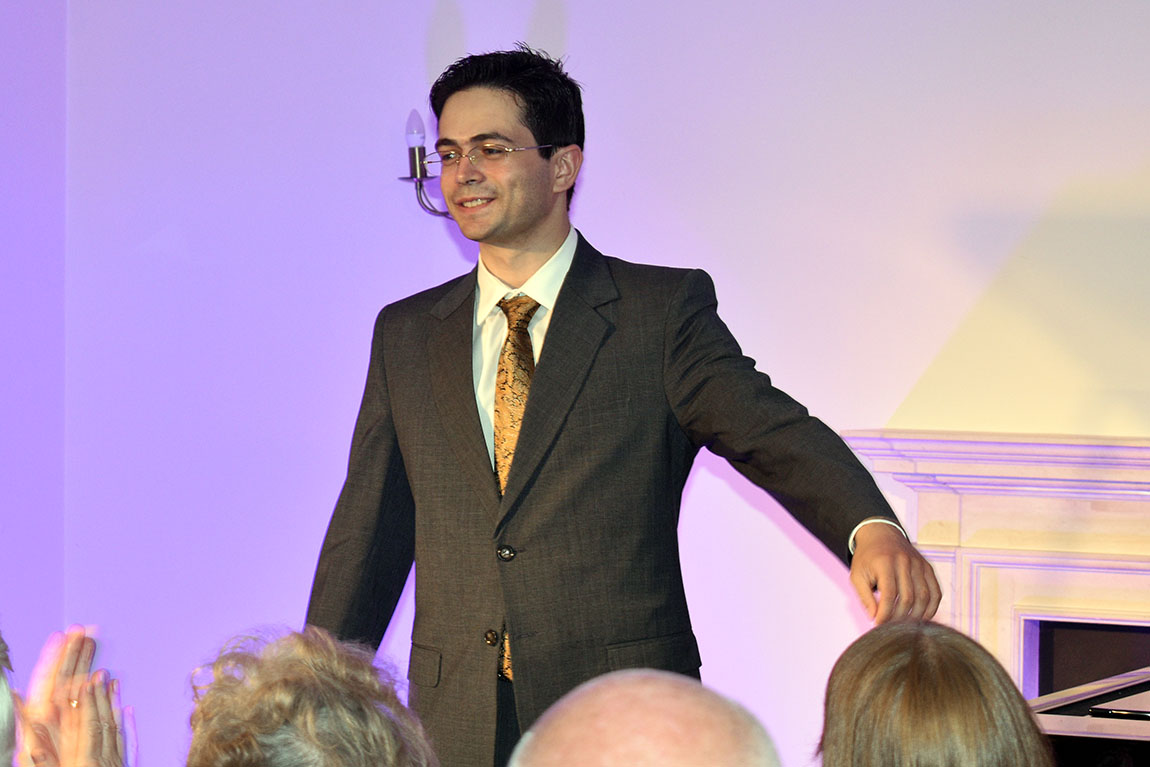
Kumi's Review
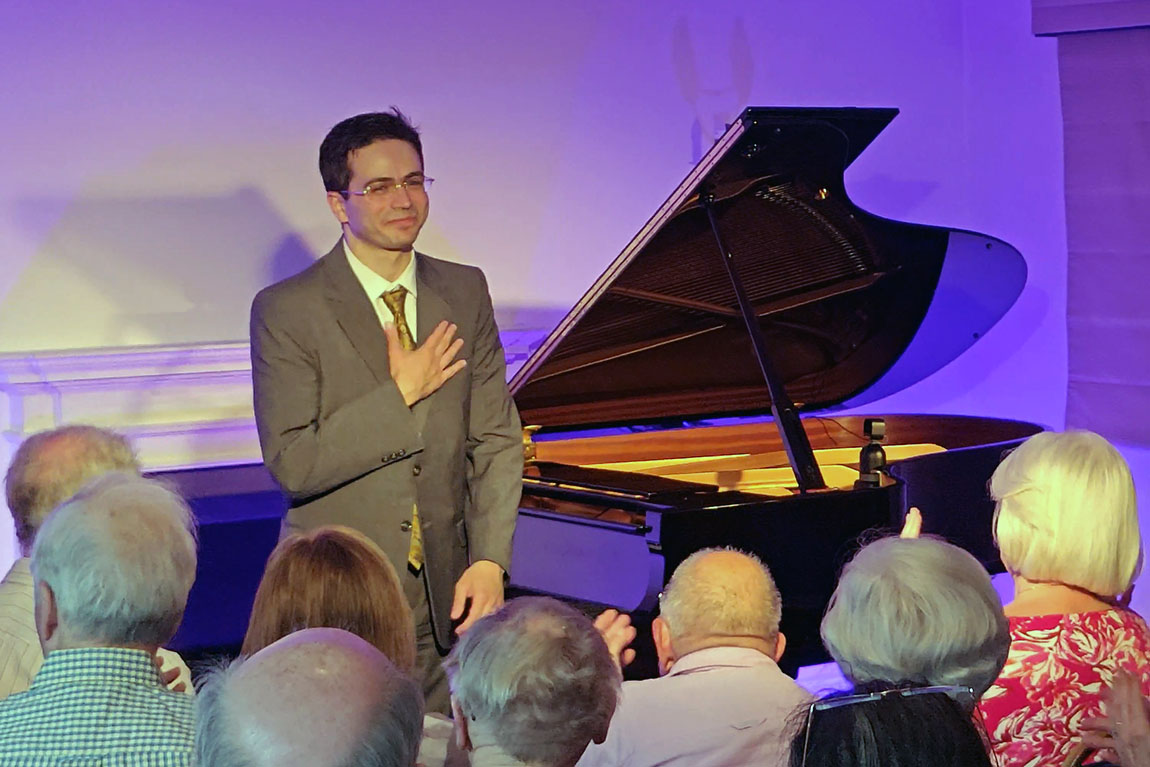
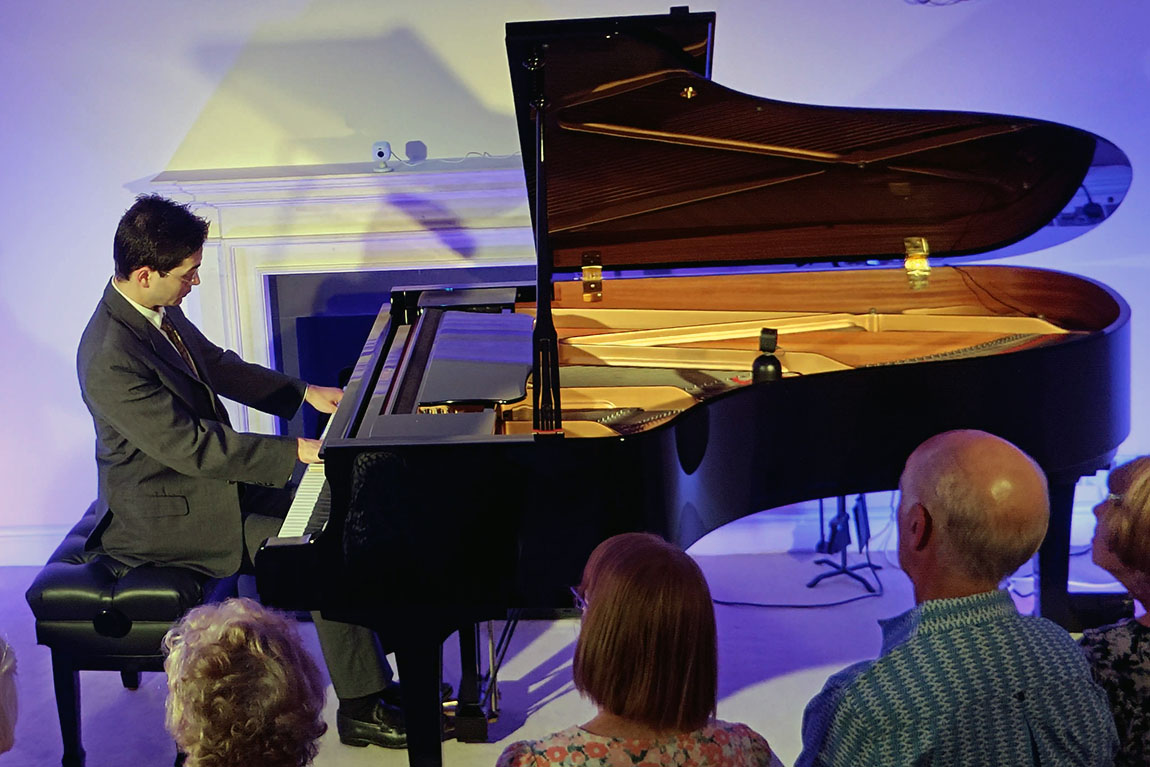
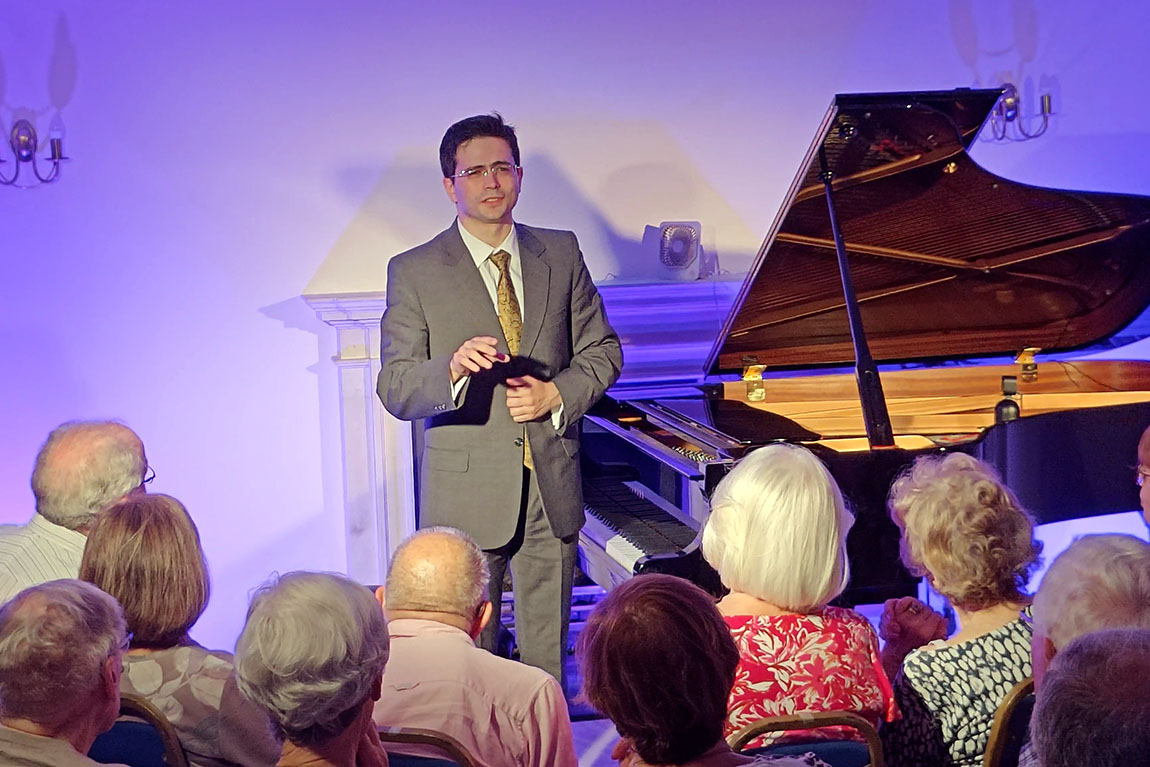
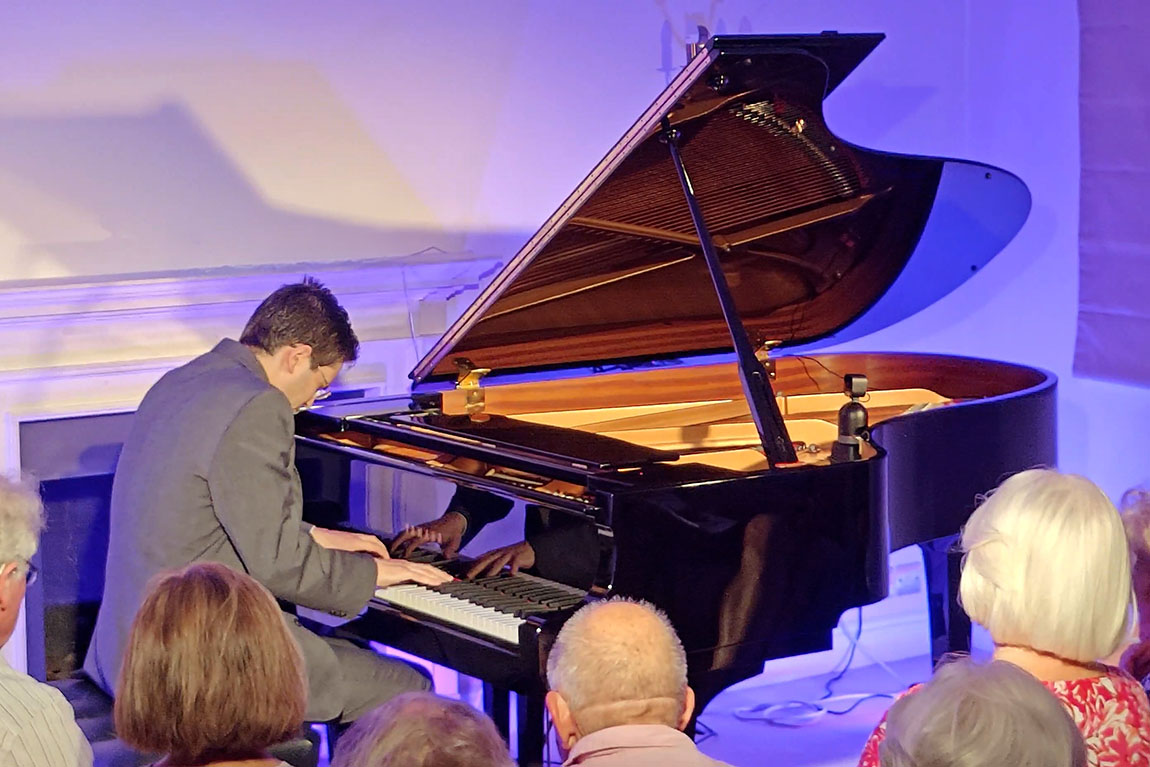
The sweet and playful early Beethoven’s Sonata, Schumann’s emotional roller-coaster Fantasiestucke, Respighi’s colourful short gems, Chopin’s mellowing Nocturne and Impromptu, and Debussy’s atmospheric and three-dimensional Preludes; Ariel’s programme was meaty and dense with quality content and very satisfying!
From the beginning, his technical abilities were apparent. This is actually one of the crucial factors which builds trust in the audience; every note, every chord was spot-on, not a single note out of place. But it didn’t mean that his music was rigidly set on focusing on creating a mistake-free concert – far from it. His playing was much more than a mere technical show; it had so much freedom to explore and flexibility to expand. I, for one, value a performance that is based on meticulousness, which leaves so much space for the musician’s artistry and imagination to develop. Ariel’s performance was exactly that, and he indeed moulded the pieces into his own and built his musicality.
Throughout the programme, Ariel’s clarity was incredible. Whether be in the sweet cantabile of Beethoven’s No. 24, thunderous mood displays of Schumann’s Fantasiesstucke, or dreamland atmosphere of Debussy, be it in a maximum volume capacity or whispering passage, his clarity meant the compositions’ voices were sung without any reservations and were received by the audience whole-heartedly.
Ariel’s choices of encore were the profusely soothing, nostalgic Brahms Intermezzo Op. 117 No. 1 and No. 2. A perfect way to seal an already joyful evening.
Programme Notes
Beethoven’s Piano Sonata No. 24 in F sharp major, Op. 78, known as À Thérèse, is one of his shortest sonatas, but its modest scale should not be mistaken for slightness. Written in 1809 and dedicated to Countess Therese Brunsvik, it stands apart from the more public force of works such as the Appassionata. Its world is more intimate, more conversational, and often more elusive. The key of F sharp major gives the sonata a distinctive brightness, though Beethoven avoids making the music merely graceful.
The first movement begins with a brief Adagio cantabile introduction. Its opening phrase seems to sing before the movement has properly begun, and it prepares the main Allegro ma non troppo with unusual tenderness. The Allegro itself is clear in outline, but full of subtle turns of phrase. Beethoven does not rely on dramatic contrast. Instead, the movement depends on balance, wit, and the quiet transformation of small ideas. The second movement, Allegro vivace, is quicker and more playful. It has something of a scherzo’s lightness, though its writing is finely controlled. The sonata as a whole is concise, but it contains a wide emotional range within its two movements.
Schumann’s Fantasiestücke, Op. 12, written in 1837, belongs to the great decade of his piano music. The title comes from a literary world Schumann knew well, especially the writings of E. T. A. Hoffmann. The set consists of eight pieces: Des Abends, Aufschwung, Warum?, Grillen, In der Nacht, Fabel, Traumes Wirren, and Ende vom Lied. Each has its own character, but the set is more than a collection of separate moods. It has the feel of a sequence of inner states, moving between stillness, agitation, questioning, humour, dream, and reflection.
Schumann often wrote through imagined personalities, especially the inward Eusebius and the impetuous Florestan. Those names do not need to be applied too neatly, but they are useful reminders that contrast lies at the heart of this music. Des Abends opens in half-light, with a floating rhythm that makes the metre feel gently unsettled. Aufschwung then drives forward with restless energy. Warum? asks its question without giving a direct answer, while Grillen turns caprice into a musical manner.
The central pieces deepen the range. In der Nacht is one of the most dramatic, urgent and shadowed. Fabel moves more unpredictably, as if several voices are interrupting one another. Traumes Wirren, or “Dream’s Confusions”, is swift, delicate, and deliberately unstable. Ende vom Lied closes the set not with a simple resolution, but with a more complicated kind of farewell. It looks back over the preceding pieces while keeping a trace of unease. Schumann’s gift here is not only for memorable character, but for placing sharply different states side by side without making them feel disconnected.
Respighi is still better known for his orchestral music, but his piano works show the same interest in colour and historical memory on a smaller scale. Respighi’s Notturno comes from his Six Pieces for Piano, an early set. It is a lyrical piece, shaped by a long melodic line and a gently rocking accompaniment. The title places it in the tradition of the nocturne, but Respighi’s harmony and spacing give it a more modern surface. It is intimate, but not sentimental.
The Prelude No. 2 from Three Preludes on Gregorian Melodies belongs to a different part of Respighi’s imagination. The set draws on the contour and atmosphere of chant rather than using the piano for display. The music has a spacious quality, with modal inflections and a careful sense of resonance. Respighi later drew on these Preludes in the orchestral work Vetrate di chiesa, but the piano originals have their own directness. Heard after Schumann, they offer a change of perspective: less psychological, more contemplative, and attentive to line, sonority, and stillness.
Chopin’s Nocturne in C sharp minor, Op. posth., KK IVa/16 was composed in 1830 and published after his death. It is sometimes known by the tempo marking Lento con gran espressione. The piece was not one of the nocturnes Chopin issued in his lifetime, but it has become one of his most familiar shorter works. Its song-like main idea is supported by a simple accompaniment, yet the surface simplicity allows for considerable freedom of timing and colour. The middle section recalls the more public, brilliant side of Chopin’s style, before the opening atmosphere returns. The piece is compact, but it shows how much Chopin could suggest through line, ornament, and harmonic delay.
The Impromptu No. 2 in F sharp major, Op. 36 is a larger and more varied work. Chopin’s impromptus do not sound improvised in the casual sense. They are carefully shaped pieces that preserve a feeling of spontaneity. This one begins with calm breadth, almost nocturne-like in tone, before moving into more animated and dramatic writing. Its contrasts are important: song, movement, turbulence, and return all have a place. The key of F sharp major also links it quietly with Beethoven’s sonata at the start of the recital. In both works, the key seems to invite a particular kind of brightness, though each composer uses it differently.
Debussy’s Préludes, Book II was published in 1913. As in Book I, Debussy places the titles at the end of each prelude in the score, suggesting that the image should not limit the listener too soon. The six heard tonight form the second half of the book and show Debussy’s late piano writing at its most varied.
La terrasse des audiences du clair de lune is a study in distance and atmosphere. Its title has an exotic, ceremonial quality, but the music avoids obvious illustration. Chords, registers, and fragments of line create a sense of suspended space.
Ondine turns to water and myth, with quick, fluid figuration and a surface that continually shifts.
Hommage à S. Pickwick Esq. P.P.M.P.C. is Debussy’s affectionate nod to Dickens. It includes a humorous reference to “God Save the King”, but the piece is more than a joke. It is a miniature portrait, dry in wit and precise in timing.
Canope is one of the most restrained of the set. The title refers to a Canopic jar, used in ancient Egyptian burial practice, and the music is spare, grave, and still.
Les tierces alternées is more abstract: a study in alternating thirds, but transformed into something lighter and more mercurial than a technical exercise.
The book ends with Feux d’artifice, or “Fireworks”. Its brilliant figuration and sudden flashes bring the recital to a public close after much music of inwardness. Near the end, Debussy briefly alludes to the French national anthem, but the effect is distant rather than blunt. The final prelude does not simply dazzle. It lets sound appear, flare, and vanish.
Ariel's Biography
In March 2023, Ariel Lanyi was honored to receive the Prix Serdang, a Swiss prize awarded by the distinguished Austrian pianist Rudolf Buchbinder. The prize is endowed with CHF 50,000 and is not a competition, but a recognition of a young pianist’s achievements and an investment in their future.
Prior to this, Ariel won 3rd prize at the 2021 Leeds International Piano Competition, performing Brahms Concerto No. 2 with the Royal Liverpool Philharmonic Orchestra conducted by Andrew Manze in the finals. In the same year, he was a winner of the Young Classical Artists Trust International Auditions.
Current highlights include returns to the Wigmore Hall and to the Miami International Piano Festival, as well as a tour of Asia.
On the concerto platform Ariel has appeared with various orchestras, including the Mahler Chamber Orchestra, Mozarteumorchester Salzburg, Israel Philharmonic, Royal Liverpool Philharmonic Orchestra, Sinfonia Viva and City of Birmingham Symphony Orchestra.
In 2021 Linn Records released his recording of music by Schubert to critical acclaim. His newest recording, Organ Reflections, a recording of piano music inspired by the organ by Mozart, Franck, and Reger, was released to critical acclaim in May 2025 (“…the admirable Lanyi drawing out their many and varied colours superbly” – from a 5-star review from the BBC Music Magazine).
An avid chamber musician, Ariel has attended the Marlboro festival, and has collaborated with eminent musicians such as Maria João Pires, Marina Piccinini, Charles Neidich, Alena Baeva, and Torleif Thedéen.
Recent highlights have included recitals at the Wigmore Hall, Fundacion Juan March in Madrid, Homburg MeisterKonzerte series in Germany, the Grafenegg festival in Austria, the Bravo!Vail festival in Colorado, the Kissinger Festsommer and Mecklenburg-Vorpommern festivals in Germany, Perth Concert Hall (broadcast by BBC Radio 3), Vancouver Recital Society, Nottingham International Piano Series, Frankfurt Alte Oper, Merkin Hall in New York, and in festivals across the UK including Chipping Campden, Brighton and Bath.
Born in Jerusalem, Ariel studied with Lea Agmon and Yuval Cohen. Based in London, he completed his studies at the Royal Academy of Music with Hamish Milne and Ian Fountain. He has received extensive tuition from eminent artists such as Robert Levin, Murray Perahia, Imogen Cooper, Nicholas Walker, and the late Alfred Brendel, Leon Fleisher and Ivan Moravec. Other awards include 1st Prize at the Grand Prix Animato Competition in Paris and 1st Prize in the Dudley International Piano Competition, as well as a finalist award at the Rubinstein Competition. Ariel was recently made an Associate of the Royal Academy of Music.